Deformidad del tórax en embudo Tratamiento en Tailandia — Costos 2026


Revisado médicamente por
Fahad Mawlood
¿Cuál es el precio del diagnóstico y los tratamientos de Deformidad del tórax en embudo en Tailandia? Descubra ahora
El costo del tratamiento de la deformidad de tórax en embudo en Tailandia generalmente incluye diagnósticos iniciales como un ECG, que oscila entre $19 / 700฿ y $50 / 1,900฿, y los honorarios quirúrgicos por los procedimientos correctivos. Los gastos totales dependen del tipo de cirugía, como la técnica de Nuss o Ravitch, y de la gravedad del pectus excavatum. Los pacientes suelen ahorrar entre un 50 y un 70% en comparación con las tarifas médicas de EE. UU. Bangkok es el centro principal para estas evaluaciones y cirugías torácicas especializadas.
Costos típicos del tratamiento de la deformidad de tórax en embudo en Tailandia
- ECG: $19 / 700฿ – $50 / 1,900฿
- Consulta con un ortopedista (traumatólogo): de $100 / 3,700฿
- Consulta con un ortopedista: de $40 / 1,500฿
Perspectiva de los expertos de Bookimed: Para casos torácicos complejos, los centros acreditados por la JCI en Bangkok ofrecen los estándares de seguridad más altos. El Hospital Internacional Bumrungrad es una de las 10 mejores instalaciones a nivel mundial, que atiende a más de un millón de pacientes al año con imágenes digitales avanzadas. Los pacientes que requieran una rehabilitación integral deberían considerar grupos especializados como PYONG, dirigidos por expertos nominados a premios. El Hospital Sikarin ofrece un valor excelente para los pacientes internacionales, combinando la calidad certificada por la ISO con un gran volumen quirúrgico.
Sus beneficios y garantías con Bookimed
Precios directos
Bookimed no añade cargos extra a los precios de los tratamientos de Deformidad del tórax en embudo. Las tarifas proceden de las listas de precios oficiales de las clínicas. Pagará directamente en la clínica por su tratamiento a su llegada al país.
Sólo clínicas y médicos verificados
Bookimed está comprometido con su seguridad. Solo trabajamos con las clínicas que mantienen altos estándares internacionales en el tratamiento de Deformidad del tórax en embudo y cuentan con las licencias necesarias para atender a pacientes internacionales en todo el mundo.
Asistencia 24/7 gratuita
Bookimed ofrece asistencia experta gratuita. Un coordinador médico personal le apoya antes, durante y después de su tratamiento, resolviendo cualquier problema. Nunca estará solo en su viaje médico de tratamiento de Deformidad del tórax en embudo.

Su coordinador médico personal de Bookimed
- Le apoya en cada etapa
- Ayuda a elegir la clínica y el médico adecuados
- Asegura un acceso rápido y conveniente a la información
Descubra las mejores clínicas de tratamiento de Deformidad del tórax en embudo en Tailandia: 3 opciones verificadas y Precios






MedConsult Bangkok Medical Clinic

Obtenga una evaluación médica para Deformidad del tórax en embudo en Tailandia: consulte con doctores experimentados ahora
Ver todos los médicos
Dr Piya Assawaboonyadej
El Dr. Piya Assawaboonyadej es especialista en cirugía ortopédica con enfoque en tumores óseos y de tejido conectivo en el Hospital Intrarat.
- Cirujano ortopédico certificado con más de una década de experiencia
- Formación de subespecialidad (fellowship) en Oncología Ortopédica y Reconstrucción en la Universidad de Iowa
- Miembro de la Sociedad Tailandesa de Tumores Musculoesqueléticos
- Investigación publicada sobre tumores óseos y técnicas quirúrgicas
- Conferencista en el Departamento de Ortopedia del Hospital Universitario Naresuan
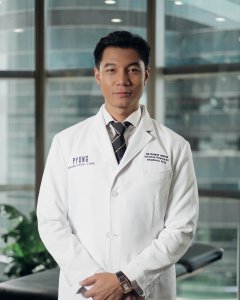
Kantaphong Thongrong
El Dr. PYONG dirige el Grupo de Rehabilitación PYONG con un enfoque en la integración de tecnologías avanzadas como el entrenamiento robótico de la marcha para una recuperación óptima del paciente.
- Certificado en medicina de rehabilitación con amplia experiencia en neurorrehabilitación
- Pionero en técnicas no invasivas, incluidas intervenciones guiadas por ultrasonido
- Instructor en el Instituto de Tecnología King Mongkut de Ladkrabang
- Investigador principal en estudios de recuperación de accidentes cerebrovasculares
Compartir contenido
Historias en video de pacientes de Bookimed
 Olena Sikoza
Preguntas frecuentes sobre el tratamiento de Deformidad del tórax en embudo en Tailandia
¿Está disponible el procedimiento de Nuss para la deformidad de pecho en embudo en Tailandia, y cuáles son los estándares de seguridad?
El procedimiento de Nuss está disponible en Tailandia en centros torácicos especializados en Bangkok. Las instalaciones mantienen la seguridad mediante la acreditación JCI y la obtención de imágenes digitales en 3D para una colocación precisa de la barra. Los cirujanos a menudo poseen becas internacionales de instituciones como la Universidad de Iowa para garantizar resultados quirúrgicos de alta calidad.
- Protocolos de seguridad: Los cirujanos utilizan guía toracoscópica para proteger los órganos internos durante la inserción de la barra.
- Cuidados postoperatorios: Los pacientes suelen someterse a una recuperación supervisada en unidades especializadas durante 24 horas.
- Estándares de acreditación: Hospitales líderes como Bumrungrad International poseen certificaciones de seguridad globales JCI y GHA.
- Tecnología utilizada: Los centros utilizan imágenes avanzadas para planificar reconstrucciones tanto para adolescentes como para adultos.
Perspectiva del experto de Bookimed: Aunque muchos hospitales ofrecen atención torácica, los pacientes deben priorizar los centros con un alto volumen internacional. El Hospital Internacional Bumrungrad trata a más de 1 millón de pacientes al año, con un 50 % proveniente de 190 países diferentes. Esta escala masiva a menudo se traduce en protocolos altamente refinados para reconstrucciones complejas de la
¿Qué credenciales debo buscar en un cirujano tailandés que corrige el pectus excavatum?
Los cirujanos tailandeses que corrigen el pectus excavatum deben contar con certificación de la junta en cirugía torácica o cardiotorácica. Deben estar autorizados por el Consejo Médico de Tailandia. La membresía en el Royal College of Surgeons of Thailand confirma que siguen los estándares nacionales. Los cirujanos expertos a menudo completan becas internacionales.
- Certificación torácica: Requiere un diploma específico del Thai Board of Thoracic Surgery.
- Acreditación hospitalaria: Busque instalaciones con Joint Commission International (JCI) para garantizar la seguridad.
- Formación avanzada: Las becas especializadas en cirugía mínimamente invasiva son vitales para los procedimientos de Nuss.
- Experiencia internacional: Los cirujanos de primer nivel a menudo se forman en instituciones de renombre en EE. UU. o Europa.
Perspectiva de expertos de Bookimed: Si bien muchos buscan cirujanos específicos, los datos a nivel de clínica revelan una brecha de calidad significativa. El Bumrungrad International Hospital y el Sikarin Hospital mantienen la acreditación JCI y manejan grandes volúmenes internacionales. Bumrungrad atrae a pacientes de más de 190 países mediante el uso de imágenes digitales y tecnología robótica. Elegir un centro con más de 200.000 pacientes anuales a menudo garantiza que la infraestructura respalde recuperaciones torácicas
¿Cuánto tiempo estaré hospitalizado y cuándo podré volar a casa después de una cirugía mínimamente invasiva de pectus en Tailandia?
La cirugía mínimamente invasiva de pectus en Tailandia requiere normalmente de 3 a 5 días de hospitalización. Los pacientes generalmente pueden volar a casa de 10 a 14 días después del procedimiento. Este plazo garantiza la estabilidad del dolor y permite a los cirujanos controlar posibles complicaciones pulmonares poco frecuentes antes del viaje aéreo.
- Estancia hospitalaria: La mayoría de los pacientes pasan de 3 a 5 días en una unidad torácica especializada.
- Autorización para volar: Los cirujanos suelen aconsejar esperar de 10 a 14 días antes de realizar vuelos internacionales.
- Viajes de larga distancia: Los vuelos de más de 6 horas pueden requerir una espera de 21 días por seguridad.
- Chequeo médico: Es obligatorio realizar una radiografía de tórax poco antes de recibir la autorización para volar.
Perspectiva del experto de Bookimed: Aunque Tailandia se encuentra entre los 10 principales destinos mundiales para la atención médica, los pacientes con pectus deben priorizar centros acreditados por la JCI como el Bumrungrad International Hospital. Este centro trata a más de 1 millón de pacientes al año. Las clínicas a gran escala suelen tener la mayor experiencia con protocolos de manejo del dolor más recientes. Estos protocolos pueden reducir las estancias hospitalarias iniciales a solo 1 o 2 días para algunos pacientes.
C
¿Qué tipo de anestesia y protocolo de manejo del dolor se utiliza para que pueda viajar de regreso cómodamente?
Los equipos médicos tailandeses utilizan protocolos de analgesia multimodal que combinan anestesia general con bloqueos nerviosos regionales. Estas técnicas aseguran una tasa de éxito del 95% en el manejo de las molestias postoperatorias. Los cirujanos suelen utilizar epidurales torácicas o bloqueos paravertebrales para permitir una movilización temprana y viajes internacionales cómodos.
- Anestesia regional: La epidural torácica o los bloqueos nerviosos proporcionan un adormecimiento continuo durante varios días.
- Protocolo de medicación: Las dosis programadas de no opioides se complementan con opioides orales para el dolor irruptivo durante el viaje.
- Manejo de espasmos: Con frecuencia se recetan relajantes musculares para prevenir la rigidez de los músculos de la espalda y las costillas.
- Autorización de viaje: Los pacientes suelen recibir un cronograma detallado y notas médicas después de 5 a 7 días.
Perspectiva del experto de Bookimed: Mientras que la mayoría de las clínicas se centran en el dolor de la incisión, los centros acreditados por la JCI, como el Bumrungrad International Hospital, utilizan un manejo avanzado del dolor para atacar los espasmos musculares involuntarios. Esto es crucial para los pacientes con pecho hundido (pectus excavatum), ya que la presión de la cabina durante los vuelos de larga distancia puede hacer que el
¿Tendré cicatrices evidentes después del procedimiento de Nuss y dónde se colocan las incisiones?
El procedimiento de Nuss es una cirugía mínimamente invasiva que deja 2 pequeñas cicatrices en los costados del pecho. Estas incisiones suelen medir de 2,5 a 5 cm de largo. Se colocan discretamente a lo largo de la línea axilar media para asegurar que no sean visibles desde el frente.
- Ubicación de la incisión: Los cirujanos realizan incisiones laterales debajo del brazo o a lo largo del pliegue de la pared torácica.
- Colocación estética: En mujeres, las incisiones a menudo se sitúan dentro del pliegue inframamario para una ocultación completa.
- Puerto de cámara: Un pequeño corte tipo ojo de cerradura en un lado permite el monitoreo con toracoscopio.
- Maduración de la cicatriz: El enrojecimiento se desvanece hasta convertirse en líneas finas del color de la piel en un periodo de 12 a 18 meses.
Perspectiva del experto de Bookimed: Aunque muchos especialistas en ortopedia se centran en tumores óseos, elegir un centro como el Bumrungrad International Hospital es una decisión estratégica para los procedimientos de Nuss. Este centro atiende a más de 500,000 pacientes internacionales al año y utiliza tecnologías asistidas por robot. Este nivel de volumen en un entorno acreditado por la JCI a menudo se correlaciona con una mayor precisión quirúrgica. La colocación precisa de la barra minimiza la necesidad de incisiones correctivas adicionales en l
¿Qué complicaciones o restricciones a largo plazo deben tener en cuenta los turistas médicos antes de volar a casa con una barra de pectus?
Volar a casa con una barra de pectus requiere esperar la autorización quirúrgica. La mayoría de los cirujanos recomiendan esperar de 7 a 14 días antes de abordar. Las principales preocupaciones incluyen el neumotórax por cambios de presión y los riesgos de desplazamiento. Los pacientes deben seguir protocolos de movimiento estrictos hasta que la barra se retire después de 2 a 3 años.
- Ventana de viaje: La autorización de vuelo generalmente sigue a una radiografía de tórax postoperatoria.
- Limitaciones físicas: Evite agacharse o girar durante al menos 4 a 8 semanas.
- Prohibiciones de actividad: Los deportes de contacto están estrictamente prohibidos mientras el implante esté colocado.
- Protocolo de seguridad: Lleve una tarjeta médica para explicar las barras metálicas en la seguridad del aeropuerto.
Perspectiva del experto de Bookimed: Tailandia alberga centros de altísimo volumen como el Bumrungrad International Hospital. Esta instalación trata a aproximadamente 1 millón de pacientes al año. Su experiencia con viajeros internacionales es extensa. Los pacientes a menudo se benefician de protocolos de rehabilitación integrados. La coordinación entre los equipos quirúrgicos y los fisiatras como el Dr. Kantaphong Thongrong garantiza transiciones de recuperación seguras. Las mejores clínicas se alinean frecuentemente con los estándares de la Joi
¿Qué lugares en Tailandia se consideran centros de excelencia para pacientes internacionales que necesitan una corrección de tórax en embudo?
Bangkok es el centro principal en Tailandia para pacientes internacionales que buscan una corrección de tórax en embudo (pectus excavatum). Los hospitales acreditados por la JCI, como Bumrungrad y Sikarin, son centros de excelencia reconocidos. Estas instalaciones ofrecen técnicas mínimamente invasivas, como el procedimiento de Nuss, para corregir el pectus excavatum con alta precisión.
- Clasificaciones hospitalarias: Bumrungrad se encuentra entre los 10 mejores hospitales del mundo.
- Tecnología especializada: Los centros utilizan el sistema robótico da Vinci Xi para cirugía torácica.
- Volumen internacional: Bumrungrad atiende a más de 500,000 pacientes internacionales de 190 países anualmente.
- Estándares de calidad: Las instalaciones líderes mantienen certificaciones de la Joint Commission International (JCI) e ISO.
Perspectiva del experto de Bookimed: Los datos muestran que elegir centros importantes como Bumrungrad ofrece una ventaja de seguridad significativa. Con más de 1,300 médicos y 70 departamentos, estos hospitales brindan acceso inmediato a equipos multidisciplinarios. Esto es vital para la corrección del tórax en embudo para garantizar que se controlen tanto las funciones cardíacas como las pulmonares.
Consenso de los pacientes: Los pacientes señalan que es esencial verificar las credenciales del cirujan