Escoliosis en Estados Unidos: las 3 mejores clínicas para su tratamiento


Revisado médicamente por
Fahad Mawlood
¿Cuál es el precio del diagnóstico y los tratamientos de Escoliosis en Estados Unidos? Descubra ahora
El costo del tratamiento de la escoliosis en los Estados Unidos de América es altamente variable, comenzando con diagnósticos esenciales como una radiografía de columna desde $250 hasta $700. El tratamiento quirúrgico mayor de la escoliosis generalmente oscila entre $95,000 y $185,000. Los gastos totales dependen de la gravedad de la curvatura, la elección entre el uso de corsé y la cirugía, y los requisitos de hardware. Los mejores centros médicos para estos procedimientos se encuentran en Maryland y Princeton.
Costos típicos del tratamiento de la escoliosis en los Estados Unidos de América
- Consulta con un ortopedista (traumatólogo): $280 – $450
- Radiografía de columna: $250 – $700
- Consulta con un neurocirujano: de $320
- Análisis de sangre extendido: de $250
- Consulta con un neurólogo: $450 – $750
- ECG: $150 – $400
- Tratamiento quirúrgico de la escoliosis: $95,000 – $185,000
- Tratamiento conservador de la escoliosis: $3,000 – $6,500
- Implantación del sistema ApiFix: $55,000 – $95,000
Perspectiva de expertos de Bookimed: Para curvaturas espinales complejas, los hospitales universitarios ofrecen el más alto nivel de experiencia especializada. El Princeton Hospital en Plainsboro está clasificado entre el 5% superior de los centros médicos estadounidenses. Los pacientes que buscan atención multidisciplinaria deben considerar el Johns Hopkins Hospital, que atiende a pacientes internacionales y viajeros nacionales. Ambas clínicas ofrecen corrección especializada de escoliosis con rangos de precios que comienzan alrededor de $45,800 para pacientes que pagan en efectivo.
| Estados Unidos | España | Turquía | |
|---|---|---|---|
| Tratamiento quirúrgico de la escoliosis | ≈ $95,000 | de $56,100 | de $15,000 |
| Tratamiento conservador de la escoliosis | ≈ $3,000 | de $2,000 | de $2,500 |
| Implantación del sistema ApiFix | ≈ $55,000 | ≈ $17,500 | de $30,000 |
| Descompresión abierta de la línea media de la columna vertebral con reconstrucción de ligamentos | ≈ $38,000 | ≈ $9,500 | ≈ $5,500 |
| Cirugía de escoliosis | ≈ $85,000 | ≈ $26,000 | de $22,400 |
Sus beneficios y garantías con Bookimed
Precios directos
Bookimed no añade cargos extra a los precios de los tratamientos de Escoliosis. Las tarifas proceden de las listas de precios oficiales de las clínicas. Pagará directamente en la clínica por su tratamiento a su llegada al país.
Sólo clínicas y médicos verificados
Bookimed está comprometido con su seguridad. Solo trabajamos con las clínicas que mantienen altos estándares internacionales en el tratamiento de Escoliosis y cuentan con las licencias necesarias para atender a pacientes internacionales en todo el mundo.
Asistencia 24/7 gratuita
Bookimed ofrece asistencia experta gratuita. Un coordinador médico personal le apoya antes, durante y después de su tratamiento, resolviendo cualquier problema. Nunca estará solo en su viaje médico de tratamiento de Escoliosis.

Su coordinador médico personal de Bookimed
- Le apoya en cada etapa
- Ayuda a elegir la clínica y el médico adecuados
- Asegura un acceso rápido y conveniente a la información
Descubra las mejores clínicas de tratamiento de Escoliosis en Estados Unidos: 3 opciones verificadas y Precios
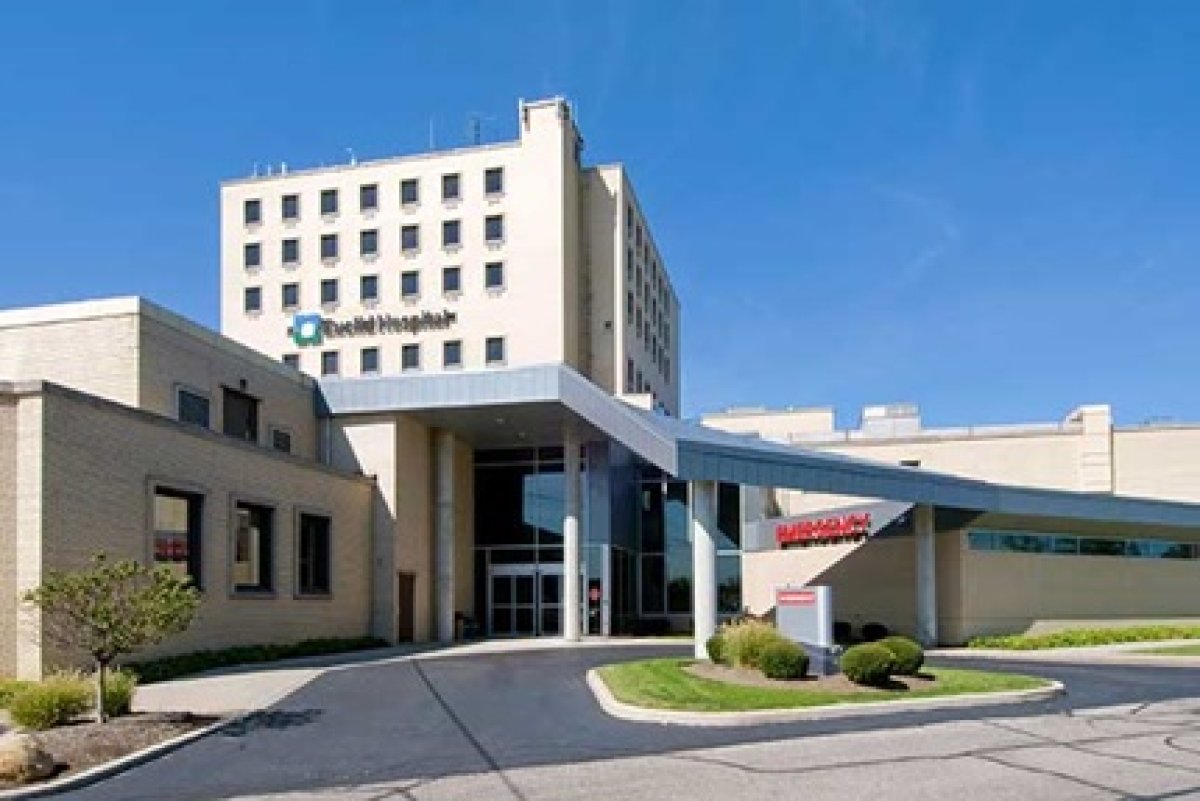





Princeton Hospital at Plainsboro

Johns Hopkins Hospital
Compartir contenido
Historias en video de pacientes de Bookimed
 Olena Sikoza
Preguntas frecuentes sobre el tratamiento de Escoliosis en Estados Unidos
¿Cuáles son las principales opciones de tratamiento no quirúrgico y quirúrgico para la escoliosis en los Estados Unidos?
Los tratamientos principales para la escoliosis en los Estados Unidos incluyen la observación, el uso de corsé y la corrección quirúrgica. Los médicos prescriben intervenciones basadas en el ángulo de Cobb y la madurez esquelética. Las opciones no quirúrgicas como el Método Schroth se centran en la postura. Los estándares quirúrgicos incluyen la fusión espinal y el anclaje vertebral (VBT) que preserva el movimiento.
- Protocolo de observación: Los médicos monitorean las curvas leves menores a 25 grados utilizando imágenes EOS de baja dosis.
- Estándares de corsé: Los adolescentes con curvas de 25 a 40 grados a menudo usan el corsé rígido de Boston.
- Terapia especializada: El Método Schroth utiliza ejercicios 3D para derrotar la columna vertebral.
- Fusión quirúrgica: Los cirujanos utilizan varillas e injertos óseos para curvas que superan los 50 grados.
- Preservación del movimiento: El anclaje vertebral (VBT) permite el crecimiento continuo de la columna en pacientes más jóvenes.
Perspectiva del experto de Bookimed: Instituciones estadounidenses de primer nivel, como el Hospital Johns Hopkins, atienden a pacientes de 49 estados anualmente. Este alto volumen a menudo conduce a una preferencia por sistemas especializados. Por ejemplo, algunos centros ahora ofrecen el sistema ApiFix. Esto proporciona un puente entre el co
¿Qué riesgos o complicaciones potenciales conlleva la cirugía de fusión espinal para la escoliosis?
La fusión espinal para la escoliosis sigue siendo muy segura, con tasas de éxito superiores al 85% en adolescentes. Los riesgos potenciales incluyen la migración del hardware interno, una flexibilidad física restringida y cambios degenerativos secundarios. La mayoría de los pacientes evitan complicaciones graves como lesiones neurológicas, que ocurren en menos del 1% de los casos.
- Seguridad neurológica: Los cirujanos utilizan monitoreo en tiempo real para proteger la médula espinal y los nervios.
- Integridad estructural: Aproximadamente del 90% al 95% de las fusiones sanan formando un hueso sólido y estable.
- Control de infecciones: Los protocolos clínicos limitan las infecciones del sitio quirúrgico entre el 1% y el 3%.
- Durabilidad del hardware: Las varillas y tornillos de titanio están diseñados para una colocación permanente sin fallos.
Perspectiva del experto de Bookimed: Los datos de instituciones de primer nivel como el Johns Hopkins Hospital indican que la atención multidisciplinaria es crucial para los casos complejos. Estos centros atienden a pacientes de 49 estados, lo que sugiere que los hospitales académicos de alto volumen ofrecen experiencia especializada. Elegir un centro con acreditación del Council of Teaching Hospital (COTH) a menudo garantiza el acceso a las últimas tecnologías de seguridad.
Consenso de l
¿Empeorará la curvatura de la escoliosis con la edad si no se trata?
Las curvaturas de escoliosis que superan los 30 grados al alcanzar la madurez esquelética a menudo empeoran con la edad. Las curvas no tratadas de más de 50 grados progresan aproximadamente 1 grado al año. Los cambios degenerativos como el deterioro de los discos o la osteoporosis suelen acelerar esta progresión en adultos. El control regular por parte de especialistas en columna vertebral previene complicaciones graves.
- Riesgo de progresión: Las curvas de más de 50 grados tienen un riesgo de empeoramiento cercano al 100%.
- Cambio anual: Los adultos mayores de 50 años pueden experimentar una progresión de 1 a 3 grados al año.
- Impacto físico: Los casos no tratados causan dolor crónico, hombros desiguales y posibles problemas de movilidad.
- Complicaciones graves: Las curvas de más de 80 grados pueden provocar tensión cardíaca y pulmonar.
Perspectiva del experto de Bookimed: Los datos clínicos muestran que las curvas lumbares a menudo progresan más rápido que las torácicas en adultos. Los centros de alto volumen como el Hospital Johns Hopkins se especializan en el manejo de estos cambios complejos. Recomendamos realizar un seguimiento de la densidad ósea mediante escáneres DEXA junto con radiografías anuales. Mantener la salud ósea es fundamental para ralentizar el avance de la curva después de los 50 años.
Consenso de los pac
¿Cómo se estructura la recuperación después de una cirugía de fusión espinal?
La recuperación de la fusión espinal abarca de 6 a 12 meses a medida que los huesos avanzan hacia una fusión biológica sólida. La curación inicial requiere de 1 a 3 días de hospitalización para el entrenamiento de movilidad. Los pacientes siguen restricciones físicas estrictas durante 6 semanas. El fortalecimiento central y la fisioterapia suelen comenzar después del segundo mes.
- Estancia hospitalaria: Los pacientes suelen permanecer de 1 a 3 días para un manejo profesional del dolor.
- Reglas de movilidad: Caminar comienza dentro de las 24 horas para prevenir coágulos y mejorar la circulación.
- La regla "No-BLT": Evite estrictamente agacharse (Bending), levantar más de 4,5 kg (Lifting) o girar (Twisting) durante 6 semanas.
- Fusión biológica: Los injertos óseos suelen requerir de 6 a 12 meses para formar estructuras sólidas.
Perspectiva del experto de Bookimed: Aunque muchos esperan un retorno rápido a la rutina, los datos de centros académicos líderes en EE. UU., como el Hospital Johns Hopkins, indican que la recuperación no es lineal. Los pacientes de 49 estados que visitan estas instalaciones a menudo informan una meseta en el rendimiento alrededor del cuarto mes. Los resultados exitosos se correlacionan con seguir estrictamente la técnica de "log-roll" (girar en bloque) durante las primeras 6 semanas en lugar de apresurarse a hacer ejer
¿El uso de corsé corrige permanentemente la curvatura espinal existente?
El uso de corsé no corrige permanentemente la curvatura espinal existente en la mayoría de los casos. Su objetivo médico principal es prevenir la progresión de la curva durante el crecimiento. Aunque la columna se alinea mejor durante el uso, generalmente vuelve a su posición original después de la madurez esquelética. La estabilidad a largo plazo es la principal métrica de éxito.
- Objetivo de estabilidad: El éxito se define como mantenerse dentro de los 5 grados del punto de partida.
- Tasas de corrección: Aproximadamente el 39% de los pacientes pueden mantener una corrección modesta de 5 a 15 grados.
- Aplicación en adultos: El uso de corsé en adultos se centra en el alivio del dolor y la ralentización de la degeneración, no en el cambio estructural.
- Sinergia del tratamiento: Combinar el uso de corsé con el Método Schroth de fisioterapia ayuda a mantener los resultados.
Perspectiva del experto de Bookimed: Los datos clínicos de instituciones de primer nivel como el Johns Hopkins Hospital muestran que el manejo de la escoliosis requiere una gran experiencia. Este centro atiende a pacientes de 49 estados anualmente. Esta escala permite a los médicos distinguir entre los casos que necesitan un corsé tradicional y aquellos adecuados para la implantación del sistema ApiFix. Esta cirugía menos invasiva que preserva el movimiento es una alternati
¿Cuántas horas al día debe usarse un corsé para que sea efectivo?
Los corsés para escoliosis deben usarse de 18 a 23 horas al día para lograr la máxima eficacia. Los datos clínicos muestran que usar un corsé durante más de 13 horas diarias se correlaciona con tasas de éxito superiores al 90%. El cumplimiento constante evita la progresión de la curvatura espinal y reduce la necesidad de cirugía.
- Corsé de Boston: Este corsé diurno común requiere de 18 a 23 horas de uso diario.
- Corsé de Providence: Esta opción solo para la noche se usa de 8 a 14 horas durante el sueño.
- Umbral de tratamiento: Usar un corsé menos de 15 horas al día suele ser ineficaz para la progresión.
- Marcadores de éxito: Se ha demostrado que los niveles altos de cumplimiento de más de 20 horas diarias estabilizan las curvas espinales.
Perspectiva del experto de Bookimed: Instituciones estadounidenses de primer nivel como el Johns Hopkins Hospital y el Princeton Hospital en Plainsboro atienden a pacientes de 49 estados. Este alto volumen sugiere que los ortopedistas especializados en estos centros priorizan el ajuste preciso. Un ajuste perfecto es esencial porque incluso pequeños espacios en el corsé pueden reducir significativamente la eficacia del tratamiento.
Consenso de los pacientes: Muchos pacientes lamentan no haber seguido el horario de más de 18 horas desde el principio. Destacan que el uso de aplicacione