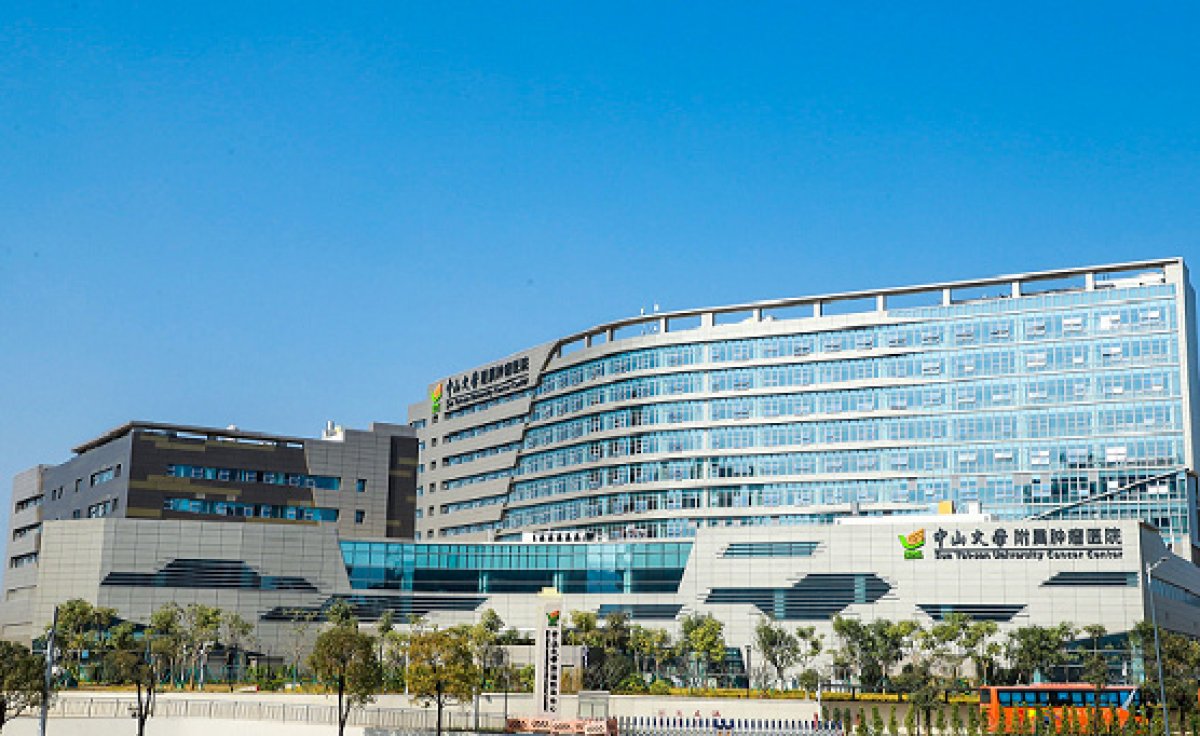
Fuda Cancer Hospital
China, Cantón


Revisado médicamente por
Fahad Mawlood
El costo del tratamiento del cáncer rectal en China generalmente incluye imágenes esenciales como una tomografía por emisión de positrones (PET-CT) junto con opciones quirúrgicas. Una resección rectal oscila entre $9,000 y $16,000, mientras que una mesorrectectomía laparoscópica varía de Precio a consultar a Precio a consultar. Los gastos totales dependen de la etapa del cáncer y del nivel del hospital, y los pacientes a menudo ahorran entre un 40 y un 60% en comparación con los EE. UU. Las principales ciudades para este tratamiento incluyen Pekín, Shanghái y Cantón.
Costos típicos del tratamiento del cáncer rectal en China
Perspectiva de expertos de Bookimed: Para pacientes con cáncer avanzado o en etapa tardía, el Hospital Oncológico Fuda ofrece terapias especializadas mínimamente invasivas. Utilizan tecnologías NanoKnife y criocirugía para tratar casos en los que la quimioterapia tradicional puede no ser la ideal. Este centro acreditado por la JCI ha atendido a más de 30,000 pacientes internacionales. Para necesidades complejas de radiación, especialistas como el Dr. Liu Shi Xin en el Hospital Xiamen Humanity brindan protocolos avanzados de IMRT y SBRT.
| China | España | Turquía | |
|---|---|---|---|
| Tomoterapia | ≈ $17,500 | ≈ $7,500 | de $6,700 |
| Sistema Robótico Da Vinci | de $35,800 | ≈ $9,500 | de $23,900 |
| Resección rectal | ≈ $9,000 | de $29,000 | de $7,000 |
| Quimioterapia intraperitoneal hipertérmica (HIPEC) | ≈ $9,000 | de $81,900 | de $18,000 |
| Nanocuchillo | de $24,000 | ≈ $9,500 | ≈ $9,500 |

Médico jefe y profesor. Experto de nivel 1 en el Centro Oncológico del West China Hospital, Sichuan University (clasificado n.º 2 en China). Completó un posdoctorado en radiología intervencionista en el Chinese PLA General Hospital. Dirige equipos multidisciplinarios (MDT) para tumores complejos. Experto en oncología intervencionista mínimamente invasiva para cánceres de hígado, pulmón y páncreas.
Acreditaciones: Miembro del consejo, WATA. Miembro de los comités de CACA y CMDA sobre in

El Dr. He Weibing es pionero de la crioablación con argón‑helio en China, con más de 20 años de práctica en primera línea. Fue miembro fundador del Hospital Oncológico Fuda (Guangzhou). Cofundó su Centro de Tratamiento Tumoral Mínimamente Invasivo y fue subdirector ejecutivo. También ayudó a crear el Grupo de Ablación de la Asociación China contra el Cáncer. Ha sido operador principal en más de 10.000 procedimientos.
Se especializa en crioablación tumoral y domina la braquiterapia con

El profesor Luo Xiaoping es un radiólogo intervencionista reconocido a nivel nacional y una autoridad destacada en el oeste de China. Comenzó a realizar intervenciones vasculares pioneras a principios de la década de 1990. Ayudó a fundar el Grupo de Intervencionismo del Segundo Hospital Afiliado de la Universidad Médica de Chongqing.
Ha realizado más de 100 000 procedimientos intervencionistas, incluidos unos 4 000 casos complejos. Sus competencias clave incluyen TACE para el carcinoma

El profesor Xiao Yueyong es médico jefe del Departamento de Radiodiagnóstico del Hospital General del EPL de China. Es un experto líder en oncología intervencionista mínimamente invasiva. Es el primer presidente de WATA (2025–). Preside la Sociedad Internacional (2020–) y la Sociedad Asiática (2012–) de Crioterapia. También es subjefe del Grupo de Expertos de la NHC sobre regulaciones de ablación tumoral (2009–).
Ha realizado más de 100 000 procedimientos mínimamente invasivos guiados
 Olena Sikoza
En China, el tratamiento del cáncer de recto se centra en la escisión total del mesorrecto (ETM) y la cirugía mínimamente invasiva. Los principales hospitales oncológicos de Guangzhou y Shanghái utilizan el sistema robótico da Vinci. Los centros especializados acreditados por la JCI integran la criocirugía, el NanoKnife y la inmunoterapia para tratar casos avanzados.
Opinión de los expertos de Bookimed: Los datos de los pacientes muestran una preferencia por los centros de Guangzhou debido a su experiencia en tratamientos alternativos. El Hospital Oncológico Fuda ha tratado a más de 30 000 pacientes internacionales. Se especializa en combinar técnicas mínimamente invasivas, como NanoKnife, con protocolos oncológicos estándar. Este enfoque ofrece alternativas en casos donde la cirugía tradicional no es la opción de tratamiento pri
En China, los pacientes con cáncer de recto pueden evitar las colostomías permanentes gracias a las modernas cirugías que preservan el esfínter, como la resección interesfinteriana (RIS). Los principales centros informan de una preservación anal exitosa en el 75 % de los casos de cáncer de recto del intestino bajo. Técnicas como la terapia neoadyuvante reducen el tamaño del tumor, lo que permite una extirpación más segura y preserva la función intestinal normal.
Opinión de expertos de Bookimed: Los datos clínicos demuestran que las instituciones médicas acreditadas por la JCI, como el Hospital Oncológico Fuda, utilizan más de 10 tipos de tratamientos mínimamente invasivos. Los pacientes suelen pasar por alto qu
La cirugía robótica para el cáncer de recto está ampliamente disponible en los principales hospitales generales de China. En 2020, representaba casi el 49 % de todas las cirugías rectales. Los principales centros de Guangzhou, Shanghái y Pekín utilizan el sistema da Vinci, así como plataformas nacionales como el MicroPort Toumai, para extirpar tumores con precisión.
Opinión de expertos de Bookimed: Si bien centros de élite como el Hospital Oncológico Fuda se especializan en criocirugía mínimamente invasiva y nanocirugía, las plataformas robóticas se concentran en grandes hospitales universitarios. Los datos muestran que en estos centros terciarios se realizan miles de cirugías, lo que confirma el alto nivel de pericia quirúrgica en resecciones pélvicas complejas.
Opinión de los pacientes: Los pacientes señala
En China, los pacientes con cáncer de recto tienen acceso a fármacos de inmunoterapia innovadores como sintilimab, toripalimab y pembrolizumab. Entre los principales agentes dirigidos se encuentran fruquintinib y cetuximab. Estos fármacos actúan sobre marcadores moleculares específicos como MSI-H/dMMR o RAS de tipo salvaje. Instituciones como el Hospital Oncológico Fuda ofrecen tratamientos mínimamente invasivos de vanguardia junto con estos fármacos.
Opinión de expertos de Bookimed: Si bien fármacos como el pembrolizumab están disponibles a nivel mundial, las innovaciones locales como el fruquintinib ofrecen una ventaja significativa. Datos de instituciones acreditadas por la JCI, como el Hospital Oncológico Fuda, muestran que a menudo combinan estos fármacos con criocirugía. Este enfoque multimodal se ha utilizado en más de 30 000 pac
La integración de la medicina tradicional china con los tratamientos occidentales para el cáncer colorrectal suele ser segura bajo supervisión profesional. Centros chinos de referencia, como el Hospital Oncológico Fuda, emplean protocolos integrales para reducir los efectos secundarios de la quimioterapia. El tratamiento coordinado ayuda a controlar las náuseas, protege la función inmunológica y mejora las tasas de supervivencia a cinco años.
Opinión de expertos de Bookimed: Los pacientes que buscan un tratamiento integral deben priorizar los hospitales afiliados a universidades importantes. Por ejemplo, el Hospital Jinshazhou está afiliado a la Universidad de Medicina Tradicional China de Guangzhou. Esta afiliación garantiza que los protocolos de la medicin