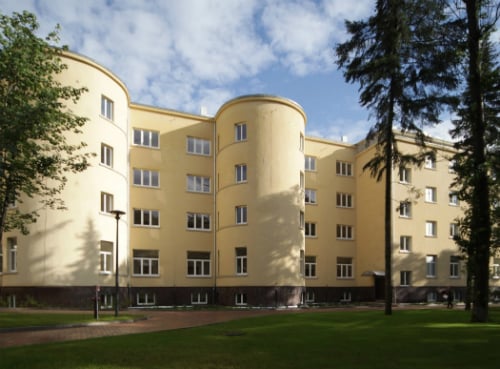
Institute of Cybernetic Surgery Cyberknife
Polonia, Wieliszew


Revisado médicamente por
Fahad Mawlood
De $50. Intervenciones clave como la braquiterapia van desde $7,500 hasta $12,000, mientras que la terapia de haz de protones cuesta entre $85,000 y $120,000. Los pacientes suelen ahorrar entre un 50 y un 80% en comparación con los precios de EE. UU. Los principales centros de tratamiento se encuentran en Varsovia, Cracovia y Breslavia.
Costos típicos del tratamiento del cáncer de vesícula biliar en Polonia
Perspectiva de expertos de Bookimed: Los pacientes con casos complejos se benefician de centros multidisciplinarios cerca de Varsovia. El Centro Europeo de Salud de Otwock es la única instalación en Polonia con un departamento dedicado a la cardio-oncología. Esto es vital para los pacientes con cáncer que padecen enfermedades cardíacas subyacentes. Para medicina de precisión avanzada, el Instituto de Cirugía Cibernética Cyberknife ofrece tecnologías de radiación especializadas. Estas clínicas polacas especializadas brindan atención de nivel internacional a un valor significativo.
| Polonia | España | Turquía | |
|---|---|---|---|
| Terapia de protones para el cáncer de próstata | ≈ $22,000 | de $34,000 | ≈ $30,000 |
| Terapia de protones para el cáncer de mama | ≈ $40,000 | de $34,800 | ≈ $28,000 |
| Terapia con haz de protones | ≈ $85,000 | de $43,300 | de $25,000 |
| Quimioterapia para el cáncer de mama | ≈ $4,500 | de $1,700 | de $3,000 |
| Braquiterapia | ≈ $7,500 | de $8,100 | de $6,500 |
Bookimed no añade cargos extra a los precios de los tratamientos de Cáncer de vesícula biliar. Las tarifas proceden de las listas de precios oficiales de las clínicas. Pagará directamente en la clínica por su tratamiento a su llegada al país.
Bookimed está comprometido con su seguridad. Solo trabajamos con las clínicas que mantienen altos estándares internacionales en el tratamiento de Cáncer de vesícula biliar y cuentan con las licencias necesarias para atender a pacientes internacionales en todo el mundo.
Bookimed ofrece asistencia experta gratuita. Un coordinador médico personal le apoya antes, durante y después de su tratamiento, resolviendo cualquier problema. Nunca estará solo en su viaje médico de tratamiento de Cáncer de vesícula biliar.


 Olena Sikoza
Polonia cuenta con oncólogos quirúrgicos especializados en cirugía hepato-pancreato-biliar para el cáncer de vesícula biliar. Estos expertos realizan resecciones radicales en centros acreditados por la JCI y centros de referencia nacionales. El tratamiento implica comités multidisciplinarios de tumores. Cirujanos como el Prof. Marek Krawczyk y el Prof. Piotr Richter se especializan en procedimientos complejos de hígado y conductos biliares.
Perspectiva del experto de Bookimed: Aunque la cirugía general es común, el cáncer de vesícula biliar requiere equipos hepatobiliares de alto volumen. Unidades especializadas como el Centro Europeo de Salud de Otwock destacan. Integran la cardiología con la oncología para casos complejos. Esto es vital para pacientes con perfiles quirúrgicos de alto riesgo. Confirme siempre si el centro realiza linfadenectomías extensas con regularidad
Los tratamientos quirúrgicos para el cáncer de vesícula biliar en etapa temprana incluyen la colecistectomía simple y radical. La colecistectomía simple extirpa la vesícula biliar para tumores limitados al revestimiento más interno. La colecistectomía radical implica la extirpación de la vesícula biliar, el tejido hepático adyacente y los ganglios linfáticos regionales para garantizar márgenes claros y prevenir la recurrencia.
Perspectiva del experto de Bookimed: Polonia ofrece centros especializados como el Centro Europeo de Salud de Otwock que se centran en la cardio-oncología. Esto es vital si las pruebas preoperatorias como un ECG muestran riesgos cardíacos antes de una cirugía mayor. Manejar la salud cardíaca junto con la resección del cáncer mejora la seguridad para pacientes mayores o aquellos con comorbilidades.
Consenso de los pacientes: L
Los pacientes en Polonia con cáncer de vesícula biliar irresecable acceden a atención multimodal mediante quimioinmunoterapia, radiación especializada y terapias locorregionales. Los protocolos estándar incluyen gemcitabina-cisplatino combinados con durvalumab o pembrolizumab. Centros avanzados como el European Health Center Otwock ofrecen intervenciones dirigidas para reducir los tumores y controlar los síntomas.
Perspectiva del experto de Bookimed: Si bien muchos hospitales generales brindan quimioterapia estándar, centros privados especializados como el European Health Center Otwock se diferencian al albergar el único Departamento de Cardio-oncología Interdisciplinaria de Polonia. Esto es crítico para los pacientes con cáncer de vesícula biliar avanzado porque las terapias sistémicas agr
Las terapias de radiación modernas como CyberKnife están disponibles en Polonia en centros oncológicos especializados. Estos sistemas utilizan la radioterapia corporal estereotáctica (SBRT) para administrar dosis de alta precisión. El Instituto de Cirugía Cibernética Cyberknife en Wieliszew ofrece radiocirugía robótica para tumores complejos con una precisión submilimétrica.
Opinión de expertos de Bookimed: Aunque varios centros polacos cuentan con tecnología SBRT, el Instituto de Cirugía Cibernética Cyberknife sigue siendo un centro único debido al apoyo del Fondo Europeo de Desarrollo Regional. Esta instalación se especializa exclusivamente en cirugía cibernética dentro de Polonia. Esta experiencia enfocada es más segura para los casos de vesícula biliar, donde los objetivos se encuentran cerca de órganos digestivos sensibles.
Consenso de los pacientes:
La estancia hospitalaria después de una cirugía de cáncer de vesícula biliar en Polonia suele durar de 1 a 3 días para los procedimientos laparoscópicos. Las cirugías abiertas extensas que implican resección hepática requieren de 7 a 10 días de hospitalización. La recuperación completa varía desde 2 semanas para casos mínimamente invasivos hasta 8 semanas para operaciones radicales complejas.
Perspectiva del experto de Bookimed: Polonia ofrece atención cardio-oncológica especializada en centros como el European Health Center Otwock en Otwock. Esto es vital para los pacientes con cáncer de vesícula biliar con afecciones cardíacas. Las cirugías complejas aquí a menudo incluyen monitoreo integrado para garantizar la seguridad cardíaca durante la larga fase de recuperación.
La neurocirugía en Polonia ofrece atención de alta calidad en centros con certificación JCI e ISO. Los neurocirujanos polacos se adhieren a estrictos estándares de formación adoptados por la Unión Europea. Muchos han completado becas en Estados Unidos o Alemania. Tecnologías avanzadas, como CyberKnife, Gamma Knife y sistemas robóticos, están ampliamente disponibles en centros privados.
Opinión experta de Bookimed: Los datos muestran una fuerte correlación entre la especialización de una clínica y el origen de sus pacientes. La Clínica KCM atiende a más de 700 pacientes internacionales al año. Se especializa en cirugía de columna mínimamente invasiva. Este volumen de trabajo le permite ofrecer paquetes de servicios especializados, que a menudo incluyen bloques de diagnóstico e implantes específicos, como el DIAM de Medtronic.
Los neurocirujanos polacos son especialistas altamente cualificados que han completado al menos 13 años de rigurosa formación médica. Esto incluye seis años de estudios de medicina, 13 meses de prácticas y seis años de residencia. Deben aprobar el Examen Estatal de Especialización (PES) y suelen estar certificados por la Asociación Europea de Sociedades de Neurocirugía (EANS).
Opinión experta de Bookimed: Los datos muestran que los neurocirujanos polacos suelen especializarse en tecnologías altamente especializadas, como el sistema ApiFix o el sistema de endoscopia lumbar SED-YESS. Especialistas como el Dr. Stanisław Kwek, de la Clínica KCM, combinan la investigación postdoctoral con una práctica quirúrgica activa. Esta combinación de profundos conocimientos académicos y un alto volumen quirúrgico los hace especialmente eficaces en cirugías de columna complejas y mínimamente in
Entre las mejores clínicas neuroquirúrgicas de Polonia se encuentran el Hospital Carolina, la Clínica KCM y centros académicos de primer nivel como el Hospital Universitario de Cracovia. Estas instituciones ofrecen tratamientos de vanguardia para enfermedades de la columna vertebral y el cerebro que cumplen con los estándares de calidad ISO y emplean a especialistas miembros de organizaciones internacionales como AO Spine.
Opinión experta de Bookimed: Si bien muchos buscan los hospitales más grandes, los datos muestran que clínicas como el Hospital Carolina ofrecen mayor eficiencia para cirugías electivas. Con más de 40 médicos especialistas en este centro de 30 camas, la proporción médico-paciente es significativamente mayor que en los centros universitarios públicos. Esto se traduc
En Polonia, la neurocirugía se centra principalmente en cirugías de columna y extirpación de tumores cerebrales. Los hospitales realizan con frecuencia microdiscectomías, fusiones espinales y estimulación cerebral profunda. Centros como el Hospital Carolina y la Clínica KCM utilizan técnicas mínimamente invasivas para tratar hernias discales, lesiones de columna y trastornos neurológicos complejos.
Opinión experta de Bookimed: Polonia se ha convertido en un centro de estabilización espinal especializada. Clínicas como el Hospital Carolina colaboran con equipos deportivos nacionales, lo que refleja su alto nivel de experiencia en el tratamiento de lesiones espinales complejas. Nuestros datos muestran que estas instituciones suelen integrar la rehabilitación directamente en el tratamiento quirúrgico. Esta combinación reduce el riesgo de compl
La rehabilitación neurológica está ampliamente disponible en Polonia a través de centros especializados y hospitales multidisciplinarios. Los programas abarcan la recuperación tras un accidente cerebrovascular, una lesión medular y enfermedades degenerativas. Instituciones como el Hospital Karolina de Varsovia y la Clínica KCM ofrecen terapia supervisada. La mayoría de los programas neuroquirúrgicos incluyen una evaluación inicial de rehabilitación postoperatoria.
Opinión experta de Bookimed: Los datos muestran que las clínicas con una gran afluencia de pacientes internacionales, como la Clínica KCM, suelen incluir rehabilitación básica en sus paquetes quirúrgicos. Esto supone una ventaja significativa, ya que coordinar la neurorrehabilitación de forma independiente en Polonia puede ser complicado. Elegir una clínica con un especialista e