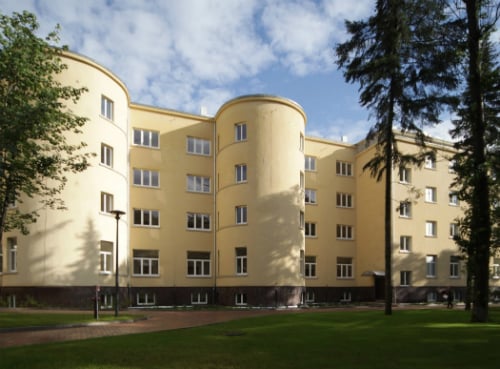
Hospital Universitario de Cracovia
Polonia, Cracovia


Revisado médicamente por
Fahad Mawlood
El costo del tratamiento del cáncer de laringe en Polonia está influenciado por el enfoque quirúrgico y la etapa de la enfermedad. De $1,300. La cirugía láser natural para el cáncer de laringe suele costar entre $3,800 y $6,800. Los pacientes a menudo ahorran entre un 40 y un 60% en comparación con los precios médicos de EE. UU. Los mejores centros de tratamiento se encuentran en Cracovia, Varsovia y Wieliszew.
Costos típicos del tratamiento del cáncer de laringe en Polonia
Perspectiva de los expertos de Bookimed: Los casos avanzados de cáncer de laringe requieren equipos multidisciplinarios. El Hospital Universitario de Cracovia ofrece una escala masiva con 103 departamentos especializados. Para los pacientes que buscan precisión no invasiva, el Instituto de Cirugía Cibernética ofrece tecnología CyberKnife única. Los pacientes en etapa temprana se benefician de centros cercanos a Varsovia como el Centro Europeo de Salud de Otwock. Operan el único departamento interdisciplinario de cardio-oncología de Polonia para un seguimiento más seguro del tratamiento.
| Polonia | España | Turquía | |
|---|---|---|---|
| Terapia con haz de protones | ≈ $85,000 | de $43,300 | de $25,000 |
| Radioterapia para el cáncer de garganta. | ≈ $6,500 | de $14,000 | de $5,000 |
| Quimioterapia para el cáncer de laringe | ≈ $3,200 | de $1,600 | ≈ $2,800 |
| Operación de cáncer de garganta | ≈ $15,000 | de $25,000 | de $10,000 |
| Laringectomia | ≈ $9,500 | ≈ $18,000 | de $12,000 |
Bookimed no añade cargos extra a los precios de los tratamientos de Cáncer de laringe. Las tarifas proceden de las listas de precios oficiales de las clínicas. Pagará directamente en la clínica por su tratamiento a su llegada al país.
Bookimed está comprometido con su seguridad. Solo trabajamos con las clínicas que mantienen altos estándares internacionales en el tratamiento de Cáncer de laringe y cuentan con las licencias necesarias para atender a pacientes internacionales en todo el mundo.
Bookimed ofrece asistencia experta gratuita. Un coordinador médico personal le apoya antes, durante y después de su tratamiento, resolviendo cualquier problema. Nunca estará solo en su viaje médico de tratamiento de Cáncer de laringe.




 Olena Sikoza
El tratamiento primario para el cáncer de laringe en Polonia prioriza la preservación de órganos a través de una atención multidisciplinaria. Los médicos utilizan la cordectomía con láser de CO2 para casos en etapa temprana. Los tumores avanzados requieren quimiorradioterapia concurrente o laringectomía total. Los centros polacos como el Hospital Universitario de Cracovia emplean radioterapia de intensidad modulada (IMRT) para minimizar la toxicidad durante el tratamiento.
Perspectiva del experto de Bookimed: Los datos del Hospital Universitario de Cracovia, que atiende a 455.000 pacientes al año, indican que los centros académicos de alto volumen son esenciales para gestionar casos complejos de cabeza y cuello. Estos centros brindan acceso a una gama más amplia de especialistas, incluidos logopedas y nutricionistas, lo cual es fundamental ya que la atención coordinada mejor
Las clínicas polacas ofrecen un tratamiento eficaz contra el cáncer de laringe con un enfoque en protocolos de preservación de la voz. Las tasas de supervivencia para los casos de estadio I alcanzan el 86%, mientras que el estadio II promedia el 71%. Los centros especializados utilizan microcirugía láser transoral y sistemas robóticos para mantener las funciones del habla y la deglución durante el proceso de recuperación.
Perspectiva del experto de Bookimed: El panorama de tratamiento en Polonia favorece a los grandes centros multidisciplinarios para casos complejos. El Hospital Universitario de Cracovia atiende a 455.000 pacientes al año, ofreciendo una profunda experiencia en oncología de alto volumen. Elegir un centro privado como el Centro Europeo de Salud de Otwock a menudo acelera el cronograma de diagnóstico. Reducir los tiempos de espera es fundamental para
Polonia cuenta con varios centros reconocidos internacionalmente para el tratamiento del cáncer de laringe. Las instalaciones líderes incluyen el Instituto Nacional de Investigación Maria Sklodowska-Curie y el Hospital Universitario de Cracovia. Estas instituciones utilizan cirugía láser avanzada y terapia de haz de protones. Priorizan protocolos de preservación de órganos para neoplasias complejas de cabeza y cuello.
Perspectiva del experto de Bookimed: El volumen de pacientes es un indicador importante de calidad en la oncología polaca. El Hospital Universitario de Cracovia gestiona más de 450,000 casos al año. Esta escala masiva asegura que los médicos hayan visto incluso los tipos de tumores laríngeos más raros. Esta profundidad clínica a menudo conduce a una planificación d
El tratamiento del cáncer de laringe en Polonia afecta la voz, la respiración y la alimentación según el tipo de procedimiento. La radiación causa ronquera o sequedad. La cirugía puede requerir redirigir las vías respiratorias a través de un estoma cervical permanente. Los centros oncológicos polacos utilizan cirugía láser y terapia de protones para preservar las funciones siempre que sea posible.
Perspectiva de expertos de Bookimed: Los datos de los principales centros polacos, como el Hospital Universitario de Cracovia, muestran que los altos volúmenes de pacientes (más de 450.000 al año) impulsan la especialización en la atención multidisciplinaria. Para los casos de laringe, este volumen significa que los cirujanos a menudo priorizan las técnicas asistidas por láser
Su equipo de rehabilitación en Polonia incluye oncólogos, cirujanos ORL y logopedas especializados. Se centran en restaurar las funciones del habla y la deglución después de procedimientos como la laringectomía. Esta atención multidisciplinaria es estándar en los principales hospitales académicos de ciudades como Cracovia y Varsovia.
Perspectiva del experto de Bookimed: Aunque existen centros privados, las grandes instalaciones como el Hospital Universitario de Cracovia ofrecen una coordinación multidisciplinaria superior. Esta clínica atiende a más de 450.000 pacientes al año en 103 departamentos diversos. Los grandes centros brindan un mejor acceso a consultores especializados como psicólogos laríngeos. Esta atención consolidada reduce las brechas en su programa de recuperación.
Consenso de los pacientes: Los pacientes enfatizan la importancia de encontrar un logopeda
Las tasas de laringectomía total en Polonia han disminuido significativamente a medida que los médicos se inclinan hacia protocolos de preservación de órganos. Los datos nacionales muestran que la cirugía radical disminuyó del 52,8% al 33,7% de los casos. Instalaciones como el Hospital Universitario de Cracovia utilizan equipos técnicos para alternativas mínimamente invasivas con el fin de preservar el habla del paciente.
Perspectiva del experto de Bookimed: Polonia ha ascendido al séptimo lugar a nivel mundial en nuestra red médica. Este crecimiento es impulsado por centros especializados como el Centro Europeo de Salud de Otwock. Ofrecen atención interdisciplinaria de cardio-oncología. Este enfoque especializado permite tratamientos complejos de cáncer de laringe para pacientes con afecciones cardíacas. Los hospitales aquí manejan volúmenes masivos, con Cracovia atendiendo a 455.000 pacientes al año
Polonia ofrece opciones avanzadas mínimamente invasivas y de precisión para el cáncer de laringe. Los cirujanos utilizan técnicas microlaríngeas especializadas y cirugía láser endoscópica para la extirpación de tumores con alta precisión. Centros de primer nivel como el Hospital Universitario de Cracovia y institutos oncológicos especializados integran estos métodos para preservar las funciones del habla y la deglución.
Perspectiva de expertos de Bookimed: El panorama oncológico de Polonia muestra una concentración única de experiencia en centros universitarios. Por ejemplo, el Hospital Universitario de Cracovia atiende a más de 450.000 pacientes al año en 103 departamentos. Este alto volumen a menudo conduce a mejores resultados quirúrgicos en reconstrucciones laríngeas complejas en comparación con clínicas r
La neurocirugía en Polonia ofrece atención de alta calidad en centros con certificación JCI e ISO. Los neurocirujanos polacos se adhieren a estrictos estándares de formación adoptados por la Unión Europea. Muchos han completado becas en Estados Unidos o Alemania. Tecnologías avanzadas, como CyberKnife, Gamma Knife y sistemas robóticos, están ampliamente disponibles en centros privados.
Opinión experta de Bookimed: Los datos muestran una fuerte correlación entre la especialización de una clínica y el origen de sus pacientes. La Clínica KCM atiende a más de 700 pacientes internacionales al año. Se especializa en cirugía de columna mínimamente invasiva. Este volumen de trabajo le permite ofrecer paquetes de servicios especializados, que a menudo incluyen bloques de diagnóstico e implantes específicos, como el DIAM de Medtronic.
Los neurocirujanos polacos son especialistas altamente cualificados que han completado al menos 13 años de rigurosa formación médica. Esto incluye seis años de estudios de medicina, 13 meses de prácticas y seis años de residencia. Deben aprobar el Examen Estatal de Especialización (PES) y suelen estar certificados por la Asociación Europea de Sociedades de Neurocirugía (EANS).
Opinión experta de Bookimed: Los datos muestran que los neurocirujanos polacos suelen especializarse en tecnologías altamente especializadas, como el sistema ApiFix o el sistema de endoscopia lumbar SED-YESS. Especialistas como el Dr. Stanisław Kwek, de la Clínica KCM, combinan la investigación postdoctoral con una práctica quirúrgica activa. Esta combinación de profundos conocimientos académicos y un alto volumen quirúrgico los hace especialmente eficaces en cirugías de columna complejas y mínimamente in
Entre las mejores clínicas neuroquirúrgicas de Polonia se encuentran el Hospital Carolina, la Clínica KCM y centros académicos de primer nivel como el Hospital Universitario de Cracovia. Estas instituciones ofrecen tratamientos de vanguardia para enfermedades de la columna vertebral y el cerebro que cumplen con los estándares de calidad ISO y emplean a especialistas miembros de organizaciones internacionales como AO Spine.
Opinión experta de Bookimed: Si bien muchos buscan los hospitales más grandes, los datos muestran que clínicas como el Hospital Carolina ofrecen mayor eficiencia para cirugías electivas. Con más de 40 médicos especialistas en este centro de 30 camas, la proporción médico-paciente es significativamente mayor que en los centros universitarios públicos. Esto se traduc