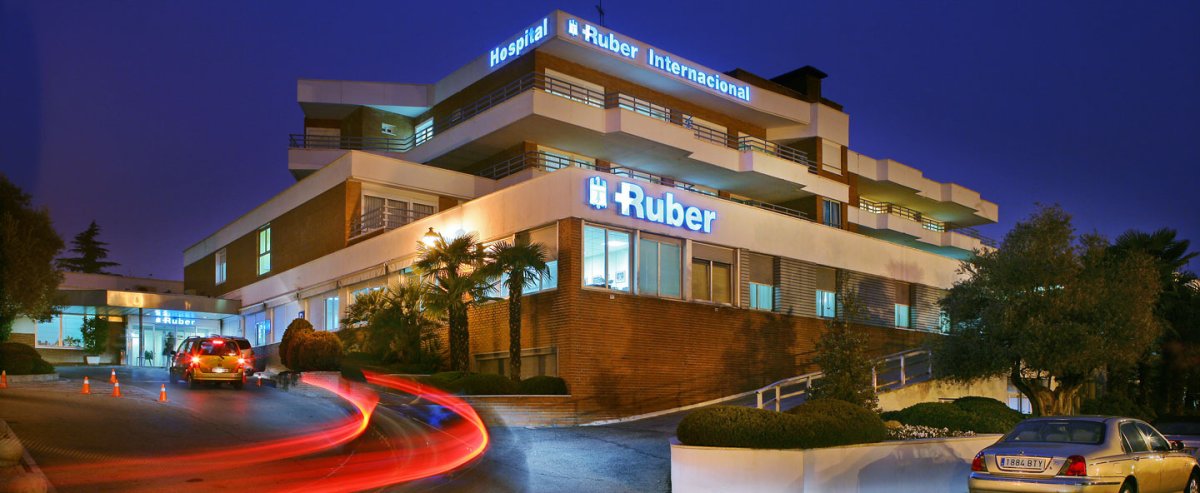
Centro Médico Teknon
España, Barcelona
Carlos Pollan
38 años de experiencia • 435+ tratamientos realizados

Clínica certificada por : 





Revisado médicamente por
Fahad Mawlood
El costo del tratamiento del cáncer de laringe en España comienza habitualmente con diagnósticos esenciales como una tomografía PET/TC que oscila entre $1,300 y $3,000. De $8,000. Los gastos totales dependen del estadio del tumor y de la tecnología elegida. Los pacientes suelen encontrar ahorros del 30-50% en comparación con los precios de la atención médica en EE. UU. Barcelona y Madrid siguen siendo los principales destinos para la oncología.
Costos típicos del tratamiento del cáncer de laringe en España
Perspectiva de los expertos de Bookimed: Los pacientes en estadios tempranos deben priorizar los centros que ofrecen cirugías láser que preservan los órganos. El Hospital Quirón Barcelona ofrece cirugía robótica avanzada y estadificación mediante PET-TC, atendiendo a 40,000 pacientes anualmente. Para casos complejos, la Clínica Universidad de Navarra ofrece atención acreditada por la JCI con altas tasas de éxito. Los pacientes que buscan investigación innovadora pueden encontrar valor en Quirónsalud Madrid, que lleva a cabo ensayos clínicos activos sobre el cáncer.
| España | Turquía | México | |
|---|---|---|---|
| Terapia con haz de protones | de $43,300 | de $25,000 | ≈ $38,000 |
| Radioterapia para el cáncer de garganta. | de $14,000 | de $5,000 | ≈ $9,000 |
| Quimioterapia para el cáncer de laringe | de $1,600 | ≈ $2,800 | ≈ $4,500 |
| Operación de cáncer de garganta | de $25,000 | de $10,000 | de $10,000 |
| Laringectomia | ≈ $18,000 | de $12,000 | ≈ $11,000 |

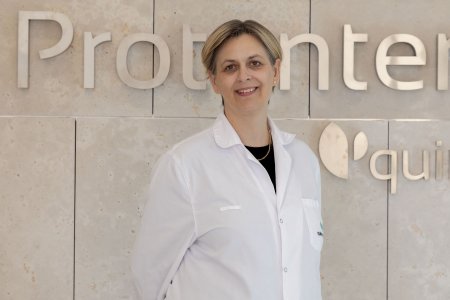
La Dra. Stephanie Lilianne E. Bolle es oncóloga radioterápica y jefa de Oncología Radioterápica del Centro de Protonterapia de Quirónsalud en Madrid. Dirige el departamento desde julio de 2024. Es el primer centro de protonterapia de España.
Doctora en Medicina, Universidad de Lieja (1998). Especialista en Oncología Radioterápica (2003). Es miembro activo de la Sociedad Europea de Oncología Pediátrica y colabora con su Grupo de Tumores Cerebrales y el Grupo de Trabajo de Oncología Radi
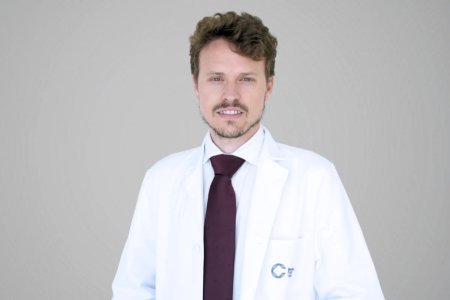
El Dr. Carlos Manuel Pollán Guisasola es cirujano consultor de otorrinolaringología en el Centro Médico Teknon y el Hospital Germans Trias i Pujol de Barcelona. Está especializado en cirugía endoscópica de base de cráneo, oncología de cabeza y cuello, y cirugía robótica con el sistema Da Vinci. Se graduó en Medicina en la Universidad de Santiago de Compostela y realizó la residencia en Otorrinolaringología a través del programa MIR en el Hospital Universitario Vall d’Hebron.
El Dr. Po
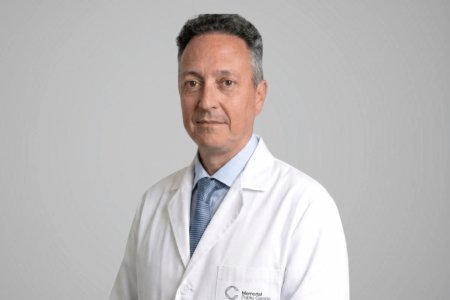
La Dra. Elena Gómez García es cirujana oral y maxilofacial en el Hospital Memorial Publio Cordón de Madrid. Realiza cirugía ortognática, procedimientos reconstructivos, reparación de labio leporino y paladar hendido, y aumento óseo facial. La Dra. Gómez García trata reconstrucciones de cabeza y cuello tras cirugías oncológicas.
Trabaja en un hospital acreditado por la Joint Commission International (JCI). El centro es miembro de la Sociedad Europea de Reproducción Humana y Embriología.
El Dr. Alberto Conde Taboada es dermatólogo y cirujano dermatológico en el Hospital Memorial Publio Cordón de Madrid. Está especializado en el tratamiento del cáncer de piel, concretamente en la microcirugía de Mohs para el melanoma y el basalioma. El Dr. Conde Taboada trabaja en un centro acreditado por la JCI.
Trata la psoriasis y otras afecciones cutáneas además de su práctica quirúrgica. Su labor abarca la oncología y la dermatología estética. La clínica cuenta con más de 100 especi
 Olena Sikoza
España alberga varias instituciones reconocidas mundialmente para el tratamiento del cáncer de laringe, incluyendo el Centro Médico Teknon y la Clínica Universidad de Navarra. Estos centros cuentan con la acreditación de la Joint Commission International. Utilizan tecnologías avanzadas como la microcirugía láser transoral y sistemas robóticos para preservar las funciones del habla y la deglución.
Perspectiva del experto de Bookimed: Aunque muchos buscan centros de oncología general, el Centro de Protonterapia Quironsalud sirve como un punto de referencia crítico para casos complejos de reirradiación. Tratando más de 900 casos, el centro utiliza la tecnología Proteus One. Este enfoque específico en la precisión de la radiación es vital para los pacientes con cáncer de laringe que necesitan evitar daños en los de
Los centros oncológicos españoles utilizan tecnologías avanzadas de preservación de órganos, incluida la terapia de protones Proteus ONE y la cirugía robótica transoral (TORS). Estos métodos se dirigen a los tumores laríngeos mientras protegen las cuerdas vocales y las funciones de deglución. Los centros acreditados por la JCI en Barcelona y Madrid integran imágenes 3D con microcirugía láser para garantizar una escisión precisa del tumor.
Perspectiva del experto de Bookimed: Si bien muchos se centran en la cirugía, España ha liderado el camino en innovación en radiación desde 2019. El Centro de Terapia de Protones Quironsalud fue el primero en el país en ofrecer la tecnología Proteus ONE. Sus especialistas líderes, como la Dra. Carme Ares, aportan experiencia del MG
El tratamiento del cáncer de laringe en España se centra en la preservación de órganos para proteger su voz. Los especialistas españoles priorizan la microcirugía láser y las técnicas robóticas para salvar la laringe. Aunque la laringectomía total resulta en la pérdida de la voz natural, la rehabilitación avanzada restaura su capacidad para hablar.
Perspectiva del experto de Bookimed: Los datos muestran que España es un centro especializado para casos oncológicos complejos, atendiendo más de 1,000 solicitudes internacionales. Instalaciones como el Hospital Quiron Barcelona y el Teknon Medical Center gestionan volúmenes masivos de pacientes, alcanzando 40,000 casos anualmente. Esta alta intensidad sugiere que los cirujanos tienen una experiencia significativa con procedimientos complejos de preservación de órganos
La tasa de éxito para el cáncer de laringe en España refleja una supervivencia a cinco años del 60% al 66%. Los tumores glóticos en etapa temprana muestran tasas de curación de hasta el 97%. Las etapas avanzadas oscilan entre el 50% y el 80% de supervivencia. Aproximadamente el 74,6% de los pacientes conservan una laringe totalmente funcional.
Perspectiva del experto de Bookimed: España es líder en radioterapia avanzada, albergando el primer centro de terapia de protones inaugurado en 2019. Esta tecnología es vital para los cánceres de cabeza y cuello porque ataca los tumores con precisión. Ayuda a evitar daños en las cuerdas vocales y los músculos de la deglución. Elegir un centro como el Proton Therapy Centre Quironsalud puede mejorar significativamente los resultados funcionales en comparación con la radiación tradicional.<
Los principales especialistas en cabeza y cuello de España para el cáncer de laringe incluyen al Dr. Ricard Mesia Nin, al Dr. Carlos Manuel Pollan Guisasola y a la Dra. Carme Ares. Estos expertos ejercen en centros acreditados por la JCI en Madrid y Barcelona. Se especializan en cirugía robótica y terapia de protones avanzada.
Perspectiva del experto de Bookimed: España ocupa el puesto 5 a nivel mundial en nuestra red médica con más de 1.000 solicitudes atendidas. Aunque muchos buscan cirujanos famosos, nuestros datos muestran un cambio hacia la terapia de protones en Quironsalud Madrid. La Dra. Carme Ares ha gestionado más de 900 casos, ofreciendo una alternativa no quirúrgica para la focalización precisa de tumores.
Consenso de los pacientes: Los pacientes señalan que es importante encontrar un equipo multidisciplinario que trabaje en conjunto. La mayoría valora los centros que priorizan la preservación de la voz e i
Los pacientes deben planificar permanecer en España de 14 días a 9 semanas, dependiendo del protocolo. Las cirugías tempranas requieren aproximadamente de 10 a 14 días localmente. Los procedimientos avanzados o la radioterapia extienden la estancia a 2 meses. Los centros acreditados en Madrid y Barcelona ofrecen estos tratamientos especializados.
Perspectiva del experto de Bookimed: Las clínicas especializadas de España, como el Proton Therapy Centre Quironsalud, ofrecen técnicas avanzadas como Proteus One. Aunque muchos paquetes oncológicos cubren diagnósticos y consultas médicas, a menudo excluyen las estancias en hoteles. Los pacientes deben presupuestar de 45 a 60 días de alojamiento local para protocolos de radiación no quirúrgicos para garantizar una curación adecuada y un monitoreo experto.
Consenso de los pacientes: Los pacientes enfatizan que los cronogramas de tratamiento nunca son fijos y aconsejan presupuestar semanas de margen adicionales.