El costo del tratamiento del cáncer de próstata en Turquía varía según los procedimientos específicos y las evaluaciones médicas involucradas. Los diagnósticos iniciales, como un escaneo PSMA PET/CT usando Galio-68, pueden costar alrededor de 1.600 € a 1.900 €. Las consultas con especialistas, como oncólogos y urólogos, varían entre 110 € y 190 € por sesión. Las intervenciones quirúrgicas, incluida la prostatectomía radical robótica, tienen un precio entre 14.200 € y 22.800 €. Tratamientos adicionales como la quimioterapia y la terapia hormonal pueden influir aún más en el gasto total. El plan de tratamiento se adapta después de evaluar la condición médica individual y las necesidades del paciente.
| España | Turquía | México | |
| Tomoterapia | de $35,000 | de $12,000 | de $25,000 |
| Terapia hormonal | de $3,000 | de $398 | de $1,200 |
| Terapia de privación de andrógenos | de $3,200 | de $1,500 | de $2,200 |
| Terapia con haz de protones | de $25,138 | de $70,000 | de $55,000 |
| Sistema Robótico Da Vinci | de $17,000 | de $9,500 | de $15,000 |
El profesor Bülent Karagöz se especializa en oncología médica con más de 20 años de experiencia, centrándose en la biología tumoral y la inmunoterapia en el Centro Médico Anadolu.
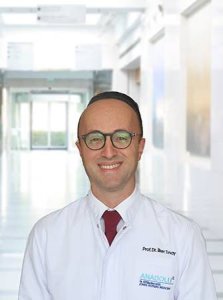
El Prof. Dr. İlker Tinay se especializa en prostatectomía robótica con Da Vinci en el Anadolu Medical Center, líder en oncología urológica.
Con más de 900 procedimientos realizados, el Dr. Solak aporta una amplia experiencia en el tratamiento del cáncer de próstata, proveniente de instituciones de élite como el MD Anderson Cancer Center.
Escrito por Anna Leonova
Escrito por Olena Sikoza
Look for Turkish urologists with European Board of Urology (EBU) certification and academic titles like Professor. These specialists should have fellowship training in uro-oncology, which focuses specifically on urinary tract cancers. Choosing a doctor at a JCI-accredited hospital helps ensure they follow international safety standards.
Bookimed Expert Insight: Data shows that many top-rated Turkish urologists completed fellowships in the US or Europe. This international training is a key differentiator because it allows them to use global clinical protocols. When a specialist holds an academic title and has Western training, they usually handle complex cases.
Patient Consensus: Patients often mention how clearly doctors explain the transition from diagnosis to robotic surgery. Many felt relieved that the medical team handled all coordination and provided clear recovery steps. They appreciated having translators present during every meeting to help them understand complex medical details.
Turkish urologists have extensive experience treating international patients from 160+ countries. Specialists like Dr. Ilker Tinay at Anadolu Medical Center hold memberships in the European Association of Urology. They use robot-assisted systems to treat prostate cancer, ensuring high precision for foreign patients seeking advanced care.
Bookimed Expert Insight: Turkish urologists often hold dual board certifications from both Turkish and European medical boards. Data shows specialists at Hisar Hospital Intercontinental frequently treat patients from the US and Canada. This specific exposure means they are familiar with Western medical protocols and expectations.
Patient Consensus: Patients were surprised by how many doctors lived and worked in the US or Europe. They say the lack of a language barrier made them feel much more comfortable.
Prof. Dr. İlker Tinay at Anadolu Medical Center and Prof. Dr. Volkan Tuğcu at Liv Hospital are leading experts. They use the da Vinci robotic system to treat prostate cancer. This technology allows for precise tumor removal while protecting nearby nerves and healthy tissue.
Bookimed Expert Insight: Many top urologists in Turkey hold fellowships from the European Association of Urology (ERUS). These specialists often serve as official trainers for other surgeons across Europe. For example, doctors at Koc University Hospital lead an authorized robotic training center. Choosing a trainer ensures your surgeon uses the most current safety protocols.
Patient Consensus: Patients often mention how quickly they could walk after surgery. One patient noted the surgical team explained every step clearly, which helped reduce their anxiety. Many were surprised that they stayed in the hospital for only a few days.
You can verify a Turkish surgeon’s experience by checking for board certification in urology. Look for specialists with academic titles like Professor or Associate Professor at JCI-accredited hospitals. These doctors often hold memberships in the European Association of Urology (EAU), which requires staying current with international standards.
Bookimed Expert Insight: Many leading Turkish surgeons, such as Dr. Volkan Tuğcu at Memorial Bahçelievler, have developed their own surgical techniques. Dr. Tuğcu created the Bakirköy Way, a robot-assisted method now used globally. Choosing a doctor who teaches other surgeons generally indicates a higher level of technical mastery.
Patient Consensus: Patients often mention feeling relieved when their surgeon explains exactly how they will preserve nerve function. Many were surprised by how quickly they could walk after robotic surgery at hospitals like Anadolu.
Robotic surgery for prostate cancer is widely available across Turkey. Leading centers in Istanbul and Ankara use the da Vinci system for minimally invasive tumor removal. Specialists here often hold international certifications and have performed over 900 successful robotic procedures for better recovery.
Bookimed Expert Insight: While many Turkish hospitals offer robotic systems, the best results come from high-volume centers. Surgeons at hospitals like Anadolu or Memorial often specialize solely in urological oncology. This focused experience typically leads to better preservation of urinary and sexual functions after surgery.
Patient Consensus: Patients are often surprised by how quickly they can walk after robotic surgery. Many mention that the small incisions meant they needed very little pain medication during recovery.
Turkish oncologists specialize in non-surgical focal therapies like HIFU and advanced radiation such as CyberKnife. These methods target tumors while protecting healthy tissue. Specialists like Dr. Ilker Tinay at Anadolu Medical Center use these tools to treat localized cancer without incisions.
Bookimed Expert Insight: Turkish oncology centers often combine radioligand therapy with MRI-guided radiation. This dual approach helps manage metastatic cases better than single-method protocols. Specialists at Anadolu Medical Center and Acibadem have the specific technology to track tumors in real-time. This ensures that radiation hits the moving prostate accurately, sparing the bladder and rectum.
Patient Consensus: Patients often mention their relief at avoiding the sexual side effects of surgery. Many found that focal treatments like HIFU allowed for a faster return to daily life. They appreciated the clear explanations provided by translators during complex radiation sessions.
Prostate cancer success rates in Turkey reach 95% for early-stage cases using robotic Da Vinci technology. This matches or exceeds global standards for cancer control and preserving urinary or sexual functions. Specialists focus on robotic surgery to minimize tissue damage and speed up recovery.
Bookimed Expert Insight: Success often depends on the hospital choice. Leading Turkish centers like Anadolu or Memorial use the same robotic systems found in New York. Patients can access these technologies without the long wait times common in Europe.
Patient Consensus: Patients are often surprised by the modern equipment and the doctors' technical skills. They frequently mention feeling safer because the intensive care units are so well-prepared.
Australian patients can obtain a remote second opinion for prostate cancer from Turkish specialists. These are available through video or text consultations. Leading centres like Group Florence Nightingale Hospitals offer virtual reviews of diagnostic reports. These include PSA levels and PET/CT scans. This helps clarify treatment choices before committing to travel.
Bookimed Expert Insight: Turkish oncology packages frequently include structured follow-up. This is vital for Australian patients. Group Florence Nightingale Hospitals lists video or text consultations within their robotic surgery packages. This allows the primary surgeon to monitor recovery once the patient returns to Australia.
Patient Consensus: Patients value the coordinated approach and comprehensive examinations in Istanbul. They note that having English translations for all medical reports makes the process manageable. Many suggest sharing the Turkish specialist's final report with a local GP. This helps provide seamless care upon returning to Australia.
Turkey offers prostate cancer treatments including robotic-assisted da Vinci surgery and focal techniques like HIFU. Specialists provide radiation therapy using systems like CyberKnife and Tomotherapy. Most treatments follow international protocols from diagnosis to surgery or medical oncology care.
Bookimed Expert Insight: Robotic surgery prices vary. Best value often lies in packages that bundle diagnostics and post-op care. For instance, Dr Volkan Tugcu at Liv Hospital Vadistanbul has performed over 2,500 operations. He uses a unique named technique, yet packages start around A$24,800. Comparing surgeon volume against package inclusions is the best way to gauge true value.
Patient Consensus: Patients are often surprised by the comprehensive support in Turkey. This includes free 3-meal plans, airport transfers, and 24-hour nursing care. Many feel the high-tech equipment, particularly the da Vinci robot, increased their confidence and recovery speed.
Robotic-assisted Da Vinci prostatectomy is a standard treatment for prostate cancer in leading Turkish private hospitals. Surgeons use this minimally invasive system for high precision and nerve sparing. Major centres in Istanbul treat international patients within specialised urological oncology departments.
Bookimed Expert Insight: Australian patients should focus on surgeon case volume rather than just technology. Specialists like Dr Ilker Tinay at Anadolu Medical Center record over 900 cases personally. This specific experience often dictates better outcomes for urinary continence than the robot alone.
Patient Consensus: Patients note the organisation is seamless in Turkey. It covers everything from airport pickups to free meals. Many feel healthy within 2 weeks of robotic surgery and appreciate having an interpreter at every appointment.
Turkey is a leading destination for prostate cancer treatment. It has many hospitals accredited by the Joint Commission International (JCI) and specialists using the da Vinci robotic system. Turkish centres provide rapid access to diagnostics like Gallium-68 PSMA PET-CT scans and minimally invasive surgeries.
Bookimed Expert Insight: Turkish oncology centres often bundle post-operative support into fixed prices. For example, Men's Health Clinics includes a 10-day 5-star hotel stay and 24-hour nursing care. Such extended recovery is rarely included in standard European or Australian private surgical quotes. This provides significant practical value for international patients.
Patient Consensus: Patients in Turkey value the professional coordination. They note that transfers, free guest houses, and translators make the process seamless. Many appreciate receiving translated English reports quickly. They also describe the hospital facilities as superior to local hotel rooms.
Prostate cancer surgery in Turkey requires a stay of 10 to 14 days. This timeframe covers preoperative tests, the procedure, and recovery time. Patients usually spend 2 to 4 nights in hospital. The remaining time allows for catheter removal before flying home.
Bookimed Expert Insight: Robotic surgery packages at clinics like Anadolu Medical Center often bundle 4 hospital nights. Some specialised urology centres in Istanbul provide 10-night hotel stays. For example, Men's Health Clinics includes 10 days in a 5-star hotel. This window is vital as surgeons wait at least 7 days before removing the catheter.
Patient Consensus: Patients suggest booking flexible flights in case recovery takes a few extra days. A personal coordinator in Turkey helps manage all airport transfers and logistics during recovery.
Typical recovery after robotic prostatectomy in Turkey involves a 2 to 4-day hospital stay. Most patients return to normal activities within 4 to 6 weeks. Walking often begins within 12 hours. Surgeons usually remove the urinary catheter between 5 and 10 days after surgery.
Bookimed Expert Insight: Turkish packages often include 6 to 10 days of hotel accommodation. This aligns with the milestone for catheter removal at 7 to 10 days. For example, Men's Health Clinics provides a 10-day stay. This allows patients to stay near their specialist for this recovery step before flying home.
Patient Consensus: Patients in Turkey report feeling healthy enough to walk early. However, they emphasise managing fatigue. Most note that catheter removal at 1 week is the main turning point for mobility.
Determine suitability for prostate cancer treatment in Turkey by providing recent PSA levels, Gleason scores, and MRI scans. Turkish onco-urologists review these to assess cancer stage and surgical fitness. They then recommend robotic surgery or focal therapies like HIFU. Doctors typically require patients to be fit for general anaesthesia.
Bookimed Expert Insight: Many Australian patients focus on robotic surgery. However, Turkish centres like Anadolu Medical Center or Men's Health Clinics also offer focal therapies. These include HIFU or NanoKnife. Choosing these less invasive options depends on precise tumour localisation via fusion biopsy. Bookimed data shows that packages ranging from A$9,500 to A$37,300 often include these diagnostics. This helps match the treatment to the exact cancer stage before surgery begins.
Patient Consensus: Patients with prostate cancer note that Turkey offers a very professional approach. The experience is often stress-free. Clinics like Medipol Mega University Hospital provide free transfers, meals, and attentive translators to assist throughout the process.
Language barriers are managed at Turkish oncology centres through international patient departments and 24/7 interpreter services. Facilities such as Anadolu Medical Center and Medipol Mega University Hospital provide personal coordinators and translators. These staff handle medical reports, clinical appointments, and logistics for international patients.
Bookimed Expert Insight: Doctors at centres like Anadolu Medical Center frequently speak English. However, communication with ward nurses may vary. Selecting packages at VM Medical Park Florya or Medical Park Antalya ensures smoother bedside care. These packages often include 24-hour nursing or language assistance for support during recovery.
Patient Consensus: Patients note that some nurses may have limited English. However, translators at Anadolu and Medipol are very attentive. They emphasise that coordinators stay in touch to solve issues quickly. This makes the process feel well-organised and professional in Turkey.
El cuidado de la salud es un sector de desarrollo clave del gobierno turco. Las autoridades turcas están convencidas de que el cuidado de la salud de los ciudadanos debe ser una prioridad incondicional de la política estatal y gastan anualmente alrededor de 77 mil millones de liras en atención médica.
Como resultado, 28,000 instalaciones médicas brindan excelente atención médica en el país. Alrededor de 50 centros están certificados por JCI (Comisión Internacional Conjunta) , un organismo internacional para mejorar la calidad y seguridad de los servicios médicos en todo el mundo. El índice de certificados recibidos es el más grande. A modo de comparación, hay 20 instituciones acreditadas por la JCI en Israel y solo 10 clínicas de este tipo en Alemania.
| Moneda | lira (el pago de los servicios también es posible en dólares y euros) |
| Mejor época para viajar | mayo-octubre |
| Idioma | Turco (la mayoría del personal médico habla inglés con fluidez) |
| Visa | no se requiere para viajar al menos 30 días por visita |
| Diferencia horaria con Europa | 3 horas |
| Diferencia horaria de Estados Unidos | 8 en punto |
| Capital | Ankara |
| Centro de Turismo Médico | Estanbul |
| Estaciones populares | Alanya, Antalya, Kemer, Marmaris |
En Turquía hay hoteles de diferentes rangos de precios y niveles de servicio. El nivel de los hoteles turcos es comparable al de los hoteles de Túnez, Marruecos o Egipto. La mayoría de los turistas eligen hoteles de 4 y 5 estrellas con comidas todo incluido. Dichos hoteles tienen todo para una estancia confortable: comida variada, amplio territorio bien cuidado, animación para niños y adultos. Algunos hoteles tienen su propio parque acuático, que los huéspedes pueden utilizar de forma gratuita. Los viajeros con poco presupuesto pueden permitirse reservar un hotel económico de 3 estrellas con media pensión o sin comidas.
La principal ventaja de los resorts turcos es una larga temporada de playa. En la costa mediterránea, comienza en abril y dura hasta noviembre. En los centros turísticos del mar Egeo, de mayo a octubre. El momento más cómodo para nadar es desde mediados de junio hasta finales de octubre. Una gran afluencia de turistas ocurre en julio-agosto, cuando la temperatura del aire es de + 38 ° C y el agua se calienta a + 27 ° C.
Para 2020, la República de Turquía tiene acuerdos sin visa con 89 estados. Algunos extranjeros están exentos de obtener una visa de entrada, otros deben obtener una visa electrónica (e-Visa) y otros deben solicitar una visa en las representaciones turcas en el extranjero.
Qué estados necesitan una visa para el tratamiento en Turquía y qué países puede cruzar libremente la frontera fácil y simplemente lea aquí .
Las visas para viajar a Turquía requieren una serie de documentos . La documentación necesaria se puede presentar 90 días antes de la salida prevista. La lista de documentos incluye: