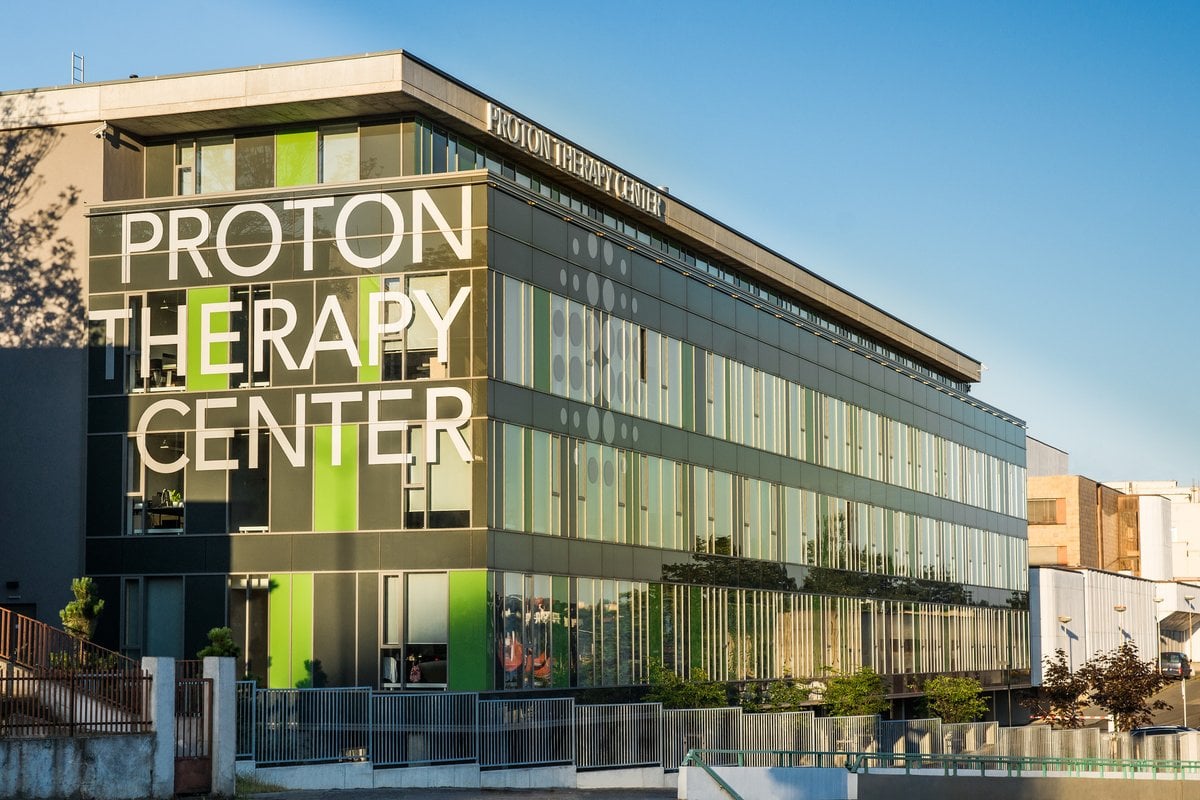
Proton Therapy Center
República Checa, Praga


Revisado médicamente por
Fahad Mawlood
De $760. Los tratamientos primarios, como la quimioembolización del hígado, van de Precio a consultar a Precio a consultar, mientras que la terapia especializada con haz de protones cuesta entre $24,000 y $34,000. Los gastos totales dependen de la etapa del cáncer y la tecnología utilizada. Los pacientes pueden ahorrar aproximadamente entre un 75% y un 85% en comparación con los EE. UU. Los mejores centros de tratamiento se encuentran en Praga, Brno y Velke Mezirici.
Costos típicos del tratamiento del cáncer de hígado en la República Checa
Perspectiva de los expertos de Bookimed: Para los pacientes que requieren oncología de alta precisión, la República Checa ofrece tecnologías robóticas y de protones de clase mundial. El Centro de Cirugía Robótica del Hospital St. Zdislava es una de las mejores opciones para la extirpación de tumores mínimamente invasiva. El Dr. Jaroslav Tvaruzek ha realizado allí más de 3,500 operaciones robóticas. Para casos avanzados no quirúrgicos, el Centro de Terapia de Protones en Praga brinda acceso a la instalación especializada más grande de Europa. Estos centros multidisciplinarios garantizan altos estándares europeos a una fracción de los costos occidentales.
| República Checa | España | Turquía | |
|---|---|---|---|
| Tomoterapia | ≈ $6,500 | ≈ $7,500 | de $6,700 |
| Terapia con haz de protones | ≈ $24,000 | de $43,300 | de $25,000 |
| Quimioterapia para el cáncer de hígado | ≈ $3,800 | de $2,300 | de $2,400 |
| Nanocuchillo | ≈ $9,500 | ≈ $9,500 | ≈ $9,500 |
| Eliminación de cáncer de hígado | ≈ $25,000 | de $24,000 | de $12,000 |
Bookimed no añade cargos extra a los precios de los tratamientos de Cáncer de hígado. Las tarifas proceden de las listas de precios oficiales de las clínicas. Pagará directamente en la clínica por su tratamiento a su llegada al país.
Bookimed está comprometido con su seguridad. Solo trabajamos con las clínicas que mantienen altos estándares internacionales en el tratamiento de Cáncer de hígado y cuentan con las licencias necesarias para atender a pacientes internacionales en todo el mundo.
Bookimed ofrece asistencia experta gratuita. Un coordinador médico personal le apoya antes, durante y después de su tratamiento, resolviendo cualquier problema. Nunca estará solo en su viaje médico de tratamiento de Cáncer de hígado.


Más de 3,500 cirugías robóticas realizadas – El Dr. Tvaruzek dirige el Centro de Cirugía Robótica en el Hospital St. Zdislava y cuenta con certificación de Intuitive Surgical.

Escrito por Halina Shubala
Escrito por Veronika Kazina

Escrito por Veronika Kazina
 Olena Sikoza
El tratamiento del cáncer de hígado en la República Checa se centra en la resección quirúrgica, la terapia de protones y la cirugía robótica avanzada. Los procedimientos incluyen hepatectomía, ablación por radiofrecuencia y quimioembolización transarterial (TACE). Los centros líderes en Praga y Brno siguen los protocolos internacionales de la Sociedad Europea de Oncología Médica.
Perspectiva del experto de Bookimed: La cirugía robótica checa ofrece una ventaja de experiencia significativa para los pacientes oncológicos. El Dr. Jaroslav Tvaruzek en el Hospital St. Zdislava ha realizado más de 3,500 procedimientos robóticos. Este alto volumen a menudo se traduce en la preservación de la función hepática después de extirpaciones complejas de tumores. Si bien muchas clínicas ofrecen opciones robóticas, los centros locales especializados en cirugía gastroenterológica muestran registros de segu
Los centros checos de cáncer de hígado mantienen altos estándares de seguridad mediante estrictas directivas médicas de la Unión Europea. Instalaciones especializadas como el Centro de Cirugía Robótica del Hospital St. Zdislava emplean cirujanos certificados por Intuitive Surgical. Estos centros utilizan tecnologías avanzadas como el robot Da Vinci y la terapia de protones.
Opinión de expertos de Bookimed: Aunque los hospitales checos son reconocidos por su precisión técnica, los datos muestran un gran enfoque en la tecnología mínimamente invasiva. El Hospital St. Zdislava es el centro robótico más grande del país, pero se encuentra en una reserva natural a 130 km de Praga. Los pacientes deben priorizar los centros con altos volúmenes quirúrgicos, como aquellos que realizan más de 4.000 operaciones robóticas, para asegurar mejores resultados.
Consenso de los pacientes: Los pacientes señalan
La resección hepática en la República Checa requiere normalmente una estancia hospitalaria de 3 a 7 días. Tras el alta, los pacientes suelen lograr una recuperación completa en un plazo de 4 a 8 semanas. Las técnicas robóticas mínimamente invasivas a menudo reducen la hospitalización inicial a solo 1 a 3 días en casos sin complicaciones.
Perspectiva del experto de Bookimed: Los centros checos como el Hospital St. Zdislava se especializan en cirugía robótica, habiendo realizado más de 4.000 procedimientos. Los datos muestran que las resecciones robóticas realizadas por expertos como el Dr. Jaroslav Tvaruzek implican menos trauma tisular. Esta tecnología favorece una regeneración hepática más rápida y reduce significativamente el riesgo de fatiga postoperatoria. Elegir cen
La cirugía de cáncer de hígado en la República Checa requiere tomografías computarizadas abdominales o resonancias magnéticas multifásicas con contraste para el mapeo vascular. Las clínicas especializadas suelen programar los procedimientos dentro de 1 a 4 semanas una vez finalizada la obtención de imágenes. Este cronograma depende de la estadificación del tumor y la disponibilidad de sistemas robóticos avanzados como Da Vinci.
Perspectiva de expertos de Bookimed: Los centros robóticos checos como el Hospital St. Zdislava realizan más de 4.000 procedimientos utilizando la tecnología Da Vinci. Especialistas como el Dr. Jaroslav Tvaruzek han completado personalmente 3.500 operaciones. Este alto volumen a menudo resulta en una autorización preoperatoria más eficiente en comparación con
El seguimiento estándar para el cáncer de hígado en la República Checa requiere revisiones cada 3 a 4 meses durante los primeros 3 años. Estas visitas incluyen exploraciones PET/TC, análisis de sangre y consultas con oncólogos. El monitoreo asegura la detección temprana de recurrencias mientras la enfermedad es más tratable.
Perspectiva de expertos de Bookimed: Los centros checos como Nemocnice Na Homolce priorizan un enfoque multidisciplinario para sus más de 20,000 pacientes anuales. Los centros de robótica de alto volumen a menudo integran protocolos de imagen específicos directamente en los planes de recuperación quirúrgica. Esto asegura que el especialista que realizó la ablación o resección inicial permanezca involucrado en la vigilancia a largo plazo.
Consenso de los pacientes: Los pacientes enfatizan la necesidad de imágenes regular