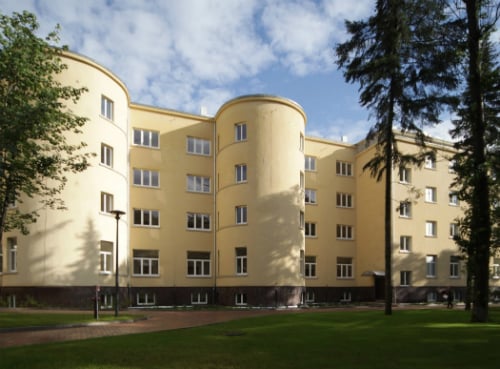
Hospital Universitario de Cracovia
Polonia, Cracovia


Revisado médicamente por
Fahad Mawlood
De $28
Costos típicos del tratamiento de la fibrilación auricular en Polonia
Perspectiva de expertos de Bookimed: Los pacientes que buscan excelencia clínica de alto volumen deben considerar el Hospital Universitario de Cracovia. Trata a 455,000 pacientes anualmente con 1,066 médicos experimentados. Para atención cardiovascular especializada, los hospitales American Heart of Poland reportan una tasa de éxito del 99.7%. Esta red cuenta con certificación ISO y acreditación de "Hospital sin dolor". Aquellos que requieren atención multidisciplinaria se benefician del Centro Europeo de Salud de Otwock. Cuenta con el único Departamento Interdisciplinario de Cardio-oncología en Polonia.
| Polonia | España | Turquía | |
|---|---|---|---|
| Crioablación del corazón | ≈ $6,500 | de $20,200 | de $8,100 |
| Ablación por radiofrecuencia con mapeo 3D | de $7,500 | de $22,400 | de $10,400 |
| Ablación por radiofrecuencia | de $3,100 | de $22,400 | de $5,200 |
Bookimed no añade cargos extra a los precios de los tratamientos de Fibrilación auricular. Las tarifas proceden de las listas de precios oficiales de las clínicas. Pagará directamente en la clínica por su tratamiento a su llegada al país.
Bookimed está comprometido con su seguridad. Solo trabajamos con las clínicas que mantienen altos estándares internacionales en el tratamiento de Fibrilación auricular y cuentan con las licencias necesarias para atender a pacientes internacionales en todo el mundo.
Bookimed ofrece asistencia experta gratuita. Un coordinador médico personal le apoya antes, durante y después de su tratamiento, resolviendo cualquier problema. Nunca estará solo en su viaje médico de tratamiento de Fibrilación auricular.

 Olena Sikoza
Las tasas de éxito para la ablación de fibrilación auricular en Polonia alcanzan hasta el 85% en casos paroxísticos. Instituciones como los hospitales American Heart of Poland reportan tasas de éxito procedimental de hasta el 99,7%. Los resultados dependen del tipo de afección y de la experiencia del electrofisiólogo en centros especializados de alto volumen.
Perspectiva de expertos de Bookimed: Los datos muestran que el volumen hospitalario es el indicador más fuerte de éxito a largo plazo. Los hospitales American Heart of Poland tratan a 60.000 pacientes anualmente y mantienen un alto éxito gracias a un personal médico de élite. Muchos de sus más de 500 médicos se formaron en Europa Occidental y EE. UU. Este volumen y experiencia global garantizan una seguridad procedimental que las clínicas regionales más pequeñas no siempre pueden igualar.
Los centros cardiológicos polacos utilizan tecnologías avanzadas de mapeo electroanatómico 3D para tratar arritmias complejas como la fibrilación auricular. Las instalaciones en Varsovia, Cracovia y Breslavia despliegan sistemas como CARTO y EnSite Precision. Estas herramientas proporcionan modelos estructurales 3D con precisión milimétrica para mejorar la exactitud de la ablación.
Perspectiva del experto de Bookimed: Las redes privadas de alto volumen, como los hospitales American Heart of Poland, reportan una tasa de éxito del 99,7% en cirugías cardíacas. Estos centros especializados a menudo brindan un acceso más rápido a herramientas electrofisiológicas avanzadas en comparación con los centros públicos. Elegir un centro de alto volumen es vital, ya que la experiencia del operador s
Los electrofisiólogos polacos recomiendan un control agresivo del ritmo mediante ablación con criobalón para casos primarios y radiofrecuencia (RF) con mapeo 3D para recurrencias complejas. Los expertos priorizan la intervención temprana y la ablación por campo pulsado (PFA) para reducir los tiempos de procedimiento. Estos especialistas mantienen una tasa de éxito del 99,7% en los principales centros cardíacos.
Perspectiva del experto de Bookimed: Los datos muestran una brecha de experiencia masiva en centros de alto volumen como American Heart of Poland. Si bien existen muchas clínicas privadas, esta red por sí sola realiza 60.000 procedimientos al año con una tasa de éxito del 99,7%. Para los pacientes, este volumen significa que los cirujanos han perfeccionado sus técnicas mucho más allá de los proveedores m
Los centros cardíacos polacos gestionan el riesgo de accidente cerebrovascular (ACV) mediante protocolos estandarizados establecidos por la Sociedad Europea de Cardiología. Los médicos utilizan la puntuación CHA2DS2-VASc para determinar las necesidades de anticoagulación. Los centros de alto volumen como American Heart of Poland reportan una tasa de éxito del 99,7% durante los procedimientos cardíacos mientras mantienen estándares rigurosos de prevención de ACV.
Perspectiva del experto de Bookimed: La infraestructura cardiológica de Polonia ofrece una ventaja de seguridad única para los casos de alto riesgo. American Heart of Poland atiende a 60.000
Los mejores hospitales para el tratamiento de la fibrilación auricular (FA) en Polonia se concentran en Varsovia, Cracovia y Silesia. Estas regiones ofrecen laboratorios de electrofisiología avanzados, sistemas de mapeo 3D y tecnologías de crioablación. Centros líderes como American Heart of Poland reportan tasas de éxito que alcanzan el 99,7% en procedimientos cardiovasculares.
Perspectiva de expertos de Bookimed: Los datos sobre el volumen de pacientes sugieren una brecha de experiencia masiva entre los centros universitarios y las clínicas privadas más pequeñas. El Hospital Universitario de Cracovia gestiona más de 450.000 casos al año. Este alto volumen a menudo se correlaciona con mejores resultados en ablaciones complejas de FA. Los pacientes que buscan un mapeo 3D avanzado deben centrarse en estos centros académicos de a
La ablación por catéter generalmente requiere el alta el mismo día o una sola noche de hospitalización para el monitoreo del ritmo. La recuperación inicial del sitio de punción en la ingle toma de 1 a 2 semanas. La curación completa y la estabilización del tejido cardíaco interno generalmente ocurren dentro de los 3 meses.
Perspectiva del experto de Bookimed: Polonia ofrece centros cardiovasculares de alto volumen como American Heart of Poland, que logra una tasa de éxito del 99,7 %. Esta escala permite a las clínicas estandarizar de forma segura los protocolos de alta el mismo día. Los pacientes pueden encontrar paquetes de ablación cardíaca a partir de aproximadamente 1.000 $ en centros especializados.
Consenso de los pacientes: Los pacientes señalan que es importante distinguir entre recibir el alta médica y sentirse con plena energía. Muchos recomiendan tomar al menos 1 semana libre del t
La neurocirugía en Polonia ofrece atención de alta calidad en centros con certificación JCI e ISO. Los neurocirujanos polacos se adhieren a estrictos estándares de formación adoptados por la Unión Europea. Muchos han completado becas en Estados Unidos o Alemania. Tecnologías avanzadas, como CyberKnife, Gamma Knife y sistemas robóticos, están ampliamente disponibles en centros privados.
Opinión experta de Bookimed: Los datos muestran una fuerte correlación entre la especialización de una clínica y el origen de sus pacientes. La Clínica KCM atiende a más de 700 pacientes internacionales al año. Se especializa en cirugía de columna mínimamente invasiva. Este volumen de trabajo le permite ofrecer paquetes de servicios especializados, que a menudo incluyen bloques de diagnóstico e implantes específicos, como el DIAM de Medtronic.
Los neurocirujanos polacos son especialistas altamente cualificados que han completado al menos 13 años de rigurosa formación médica. Esto incluye seis años de estudios de medicina, 13 meses de prácticas y seis años de residencia. Deben aprobar el Examen Estatal de Especialización (PES) y suelen estar certificados por la Asociación Europea de Sociedades de Neurocirugía (EANS).
Opinión experta de Bookimed: Los datos muestran que los neurocirujanos polacos suelen especializarse en tecnologías altamente especializadas, como el sistema ApiFix o el sistema de endoscopia lumbar SED-YESS. Especialistas como el Dr. Stanisław Kwek, de la Clínica KCM, combinan la investigación postdoctoral con una práctica quirúrgica activa. Esta combinación de profundos conocimientos académicos y un alto volumen quirúrgico los hace especialmente eficaces en cirugías de columna complejas y mínimamente in
Entre las mejores clínicas neuroquirúrgicas de Polonia se encuentran el Hospital Carolina, la Clínica KCM y centros académicos de primer nivel como el Hospital Universitario de Cracovia. Estas instituciones ofrecen tratamientos de vanguardia para enfermedades de la columna vertebral y el cerebro que cumplen con los estándares de calidad ISO y emplean a especialistas miembros de organizaciones internacionales como AO Spine.
Opinión experta de Bookimed: Si bien muchos buscan los hospitales más grandes, los datos muestran que clínicas como el Hospital Carolina ofrecen mayor eficiencia para cirugías electivas. Con más de 40 médicos especialistas en este centro de 30 camas, la proporción médico-paciente es significativamente mayor que en los centros universitarios públicos. Esto se traduc
En Polonia, la neurocirugía se centra principalmente en cirugías de columna y extirpación de tumores cerebrales. Los hospitales realizan con frecuencia microdiscectomías, fusiones espinales y estimulación cerebral profunda. Centros como el Hospital Carolina y la Clínica KCM utilizan técnicas mínimamente invasivas para tratar hernias discales, lesiones de columna y trastornos neurológicos complejos.
Opinión experta de Bookimed: Polonia se ha convertido en un centro de estabilización espinal especializada. Clínicas como el Hospital Carolina colaboran con equipos deportivos nacionales, lo que refleja su alto nivel de experiencia en el tratamiento de lesiones espinales complejas. Nuestros datos muestran que estas instituciones suelen integrar la rehabilitación directamente en el tratamiento quirúrgico. Esta combinación reduce el riesgo de compl