Ir a inicio

Cómo funciona

Hemos transformado el proceso de búsqueda de clínicas, haciéndolo simple, rápido y personalizado.
Responda algunas preguntasComplete un breve formulario para contarnos sobre su estado de salud y necesidades médicas.
Obtenga ofertas personalizadas3 clínicas seleccionadas especialmente según sus respuestas le proporcionan planes de tratamiento personalizados y presupuestos.
Elija la mejor opciónCompare ofertas y elija la clínica que más le convenga.
También puede consultar las 9 clínicas a continuación.
820К+ pacientes han recibido asistencia desde 2014
50 países
1,500 clínicas
6K+ reseñas
3K+ médicos calificados

¿Cuál es el precio del diagnóstico y los tratamientos de Absceso de la médula espinal en España? Descubra ahora

El precio promedio del diagnóstico y tratamiento de Absceso de la médula espinal en España es de $32,239, el precio mínimo es de $11,618, y el precio máximo es de $52,280.
Datos verificados por Bookimed a partir de June 2026, basados en solicitudes de pacientes y cotizaciones oficiales de 123 clínicas en todo el mundo. Los costos medianos se basan en facturas reales (2025–2026) y se actualizan mensualmente. Los precios reales pueden variar.

Descubra las mejores clínicas de tratamiento de Absceso de la médula espinal en España: 9 opciones verificadas y Precios

El ranking de clínicas de Bookimed se basa en algoritmos de data science, ofreciendo una comparación confiable, transparente y objetiva. Tiene en cuenta la demanda de pacientes, las puntuaciones de reseñas (positivas y negativas), la frecuencia de actualización de opciones de tratamiento y precios, la rapidez de respuesta y las certificaciones de las clínicas.
Quironsalud Madrid
3.86 reseñas
Precio a consultar
Más información
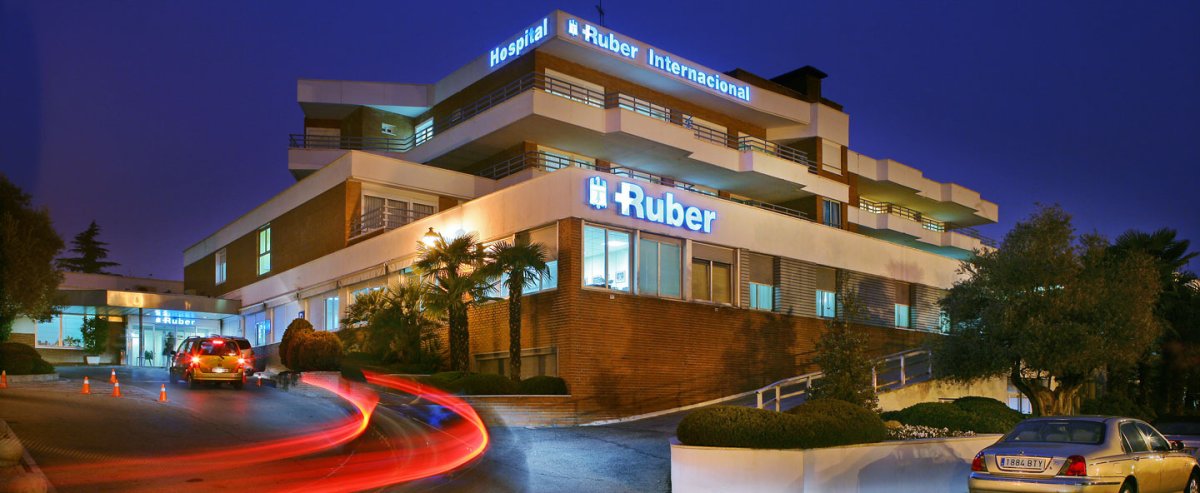
Hospital Ruber Internacional
4.5
Precio a consultar
Más información
Anuncio
Centro Médico Teknon

Centro Médico Teknon

España, Barcelona

Bartolome Oliver

50 años de experiencia • 280+ tratamientos realizados
acreditaciones :

Clínica certificada por :

El Hospital Teknon es un centro médico privado de Barcelona, España, reconocido internacionalmente por sus avanzados servicios de diagnóstico y tratamiento prestados por especialistas de renombre.

El hospital está especializado en epileptología, neurocirugía, oncología, cirugía cardiaca y terapia avanzada con células madre para la recuperación de traumatismos. Cuenta con múltiples acreditaciones de la JCI y ha recibido numerosos premios a la excelencia en turismo médico, sobre todo en oncología, cirugía cardiaca, neurocirugía y tratamiento de la epilepsia.

El Hospital Teknon es la opción preferida de personas de alto nivel, como famosos, atletas y políticos. Su equipo médico ha atendido a personalidades como la cantante Shakira, el futbolista Andrés Iniesta (FC Barcelona) y el campeón olímpico Thomas Röhler. El hospital también ha administrado terapias con células madre a jugadores del FC Barcelona y es el Servicio Médico Oficial y hospital de referencia de la 37ª regata de vela de la Copa América Louis Vuitton en 2024.

El Hospital Teknon ofrece una amplia gama de servicios médicos para pacientes internacionales, desde consultas en línea hasta complejas intervenciones quirúrgicas. Un equipo de especialistas y coordinadores médicos experimentados garantiza una atención de alta calidad y un tratamiento centrado en el paciente.

Hospital Sant Joan de Déu Barcelona
4.744 reseñas
Precio a consultar
Más información
Hospital Quiron Barcelona
4.46 reseñas
Precio a consultar
Más información

Obtenga una evaluación médica de tratamiento de Absceso de la médula espinal en España: haga una consulta con 8 médicos experimentados ahora

Ver todos los médicos
verificado

Bartolome Oliver

50 años de experiencia • 280+ tratamientos realizados

El Dr. Bartolomé Oliver es pionero en cirugía robótica de columna, realizando más de 200 cirugías anuales en el Centro Médico Teknon.

  • Más de 40 años de especialización en neurocirugía mínimamente invasiva
  • Codirector de la Unidad de Chiari y Hipermovilidad Craneocervical
  • Primero en el sur de Europa en utilizar el sistema Mazor Robotics Renaissance
  • Autor de más de 150 publicaciones científicas
  • Presidente de la European Skull Base Society
verificado

Javier Herrero Jover

46 años de experiencia • 10000+ tratamientos realizados

Más de 30 años de trayectoria pionera en cirugía plástica y reconstructiva: el Dr. Herrero integra la planificación virtual 3D para lograr mayor precisión.

  • Fundador de Alma IT Systems para simulaciones quirúrgicas personalizadas
  • Dirige la Unidad Herrero Jover Médicos en el Centro Médico Teknon
  • Autor de más de 150 publicaciones y ponente en más de 350 congresos internacionales
  • Expresidente de CARS, el congreso líder en tecnología quirúrgica
verificado

Gerardo Conesa Bertran

41 años de experiencia

Director de Neurocirugía del Centro Médico Teknon, el Dr. Conesa ha realizado más de 1.100 cirugías de médula espinal y cerebro a lo largo de sus 38 años de carrera.

  • Especializarse en cirugías del tronco encefálico y de áreas altamente funcionales
  • Ser pionero en el uso de la realidad aumentada para la planificación de cirugías cerebrales
  • Formarse en la Universidad de Loyola y en el Massachusetts General Hospital
  • Ser miembro de las sociedades europea y española de neurocirugía
verificado

Nnamdi Elenwoke

19 años de experiencia

El Dr. Nnamdi Elenwoke es neurocirujano en el Neuroinstitut – Centro Médico Teknon (Barcelona), un centro de referencia en Europa. Está especializado en neurocirugía mínimamente invasiva y funcional. Posee experiencia específica en la malformación de Arnold–Chiari y en los trastornos de la unión craneovertebral. En su práctica utiliza técnicas microquirúrgicas avanzadas, cirugía endoscópica de la base del cráneo y neurocirugía asistida por robot.

Formación y entrenamiento: Médico (2007). Residencia de Neurocirugía (MIR) en el Hospital Miguel Servet, Zaragoza. Formación avanzada en cirugía endoscópica de la base del cráneo en la Universidad de Emory, Atlanta. Formación clínica en el National Hospital for Neurology and Neurosurgery, Londres. Cuenta con más de 15 años de experiencia en cirugía compleja de cerebro y columna.

Competencias clave: descompresión de fosa posterior; tumores cerebrales y medulares; cirugía de columna mínimamente invasiva; hidrocefalia y siringomielia. Emplea técnicas de imagen avanzadas y neuronavegación para mejorar la seguridad y preservar la función. Acreditaciones: Sociedad Española de Neurocirugía, EANS y el Colegio Oficial de Médicos de Barcelona. Ha publicado trabajos científicos y participa activamente en congresos internacionales.

Compartir contenido

Historias en video de pacientes de Bookimed

Dayana
Combiné mis vacaciones en Antalya con un chequeo médico.
Procedimiento: Chequeo femenino
Igor
¡Fue genial! Traslados, alojamiento, tratamiento, todo incluido.
Procedimiento: Implante dental
Clínica: WestDent Clinic
Marina
Bookimed se encargó de todo. No tuve que preocuparme por nada.
Procedimiento: Chequeo femenino
Actualizado: 12/09/2024
Escrito por
Olena Sikoza
Olena Sikoza
Сopywriter en español
Copywriter médica certificada responsable del contenido en español de Bookimed. Más de 7 años de experiencia en redacción sobre salud y turismo médico, con formación académica en edición científica y desarrollo de contenidos.
Fahad Mawlood
Editor médico y Científico de datos
Médico general. Ganador de 4 premios científicos. Sirvió en Asia Occidental. Es el ex jefe del equipo médico que soporta a pacientes de habla árabe. Ahora es responsable del procesamiento de datos y la precisión del contenido médico.
Fahad Mawlood Linkedin
Esta página puede incluir información relacionada con diversas afecciones médicas, tratamientos y servicios de salud disponibles en diferentes países. Tenga en cuenta que el contenido se proporciona sólo con fines informativos y no debe interpretarse como asesoramiento médico o orientación. Por favor consulte con su médico o con un profesional médico calificado antes de comenzar o cambiar el tratamiento médico.

Preguntas frecuentes sobre el tratamiento de Absceso de la médula espinal en España

Estas preguntas frecuentes provienen de pacientes reales que buscan atención médica a través de Bookimed. Las respuestas son proporcionadas por coordinadores médicos experimentados y representantes autorizados de las clínicas.

How is a spinal cord abscess treated in Spain?

In Spain, spinal cord abscess treatment involves immediate hospitalization for urgent neurosurgical decompression and IV antibiotic therapy. Specialists use advanced neuromonitoring to preserve motor function. Surgeons typically perform a laminectomy to drain the infection. High-volume centers in Barcelona and Madrid follow standardized European protocols for these critical emergencies.

  • Surgical access: Neurosurgeons perform laminectomy or laminoplasty to drain fluid.
  • Advanced assistance: Surgeons use robotic visualization and real-time intraoperative neuromonitoring.
  • Antibiotic protocol: Patients receive broad-spectrum IV antibiotics for 4 to 6 weeks.
  • Pathogen identification: Blood cultures specifically screen for Staphylococcus aureus and regional pathogens.

Bookimed Expert Insight: Spanish neurosurgery centers like Centro Médico Teknon integrate robotic-assisted technology like the Mazor Robotics Renaissance system. This pattern of high-tech adoption allows surgeons to navigate complex spinal structures with 1.5-millimeter precision. For abscesses, this precision helps avoid damaging thin nerve layers during drainage. Patients should look for centers that combine this robotic accuracy with 30+ year veteran neurosurgeons like Prof. Dr. Bartolome Oliver or Dr. Gerardo Conesa Bertran.

Patient Consensus: Patients note that top-tier Spanish hospitals offer a high level of comfort, with some providing hotel-like rooms and royal apartments during recovery. Families often emphasize that pediatric neurosurgery cases benefit from specialized centers that focus solely on children, like Sant Joan de Déu.

Is physical therapy needed after surgery for a spinal cord abscess?

Physical therapy is essential after spinal cord abscess surgery to restore mobility and stability. It addresses neurological deficits like muscle weakness or loss of sensation caused by nerve compression. Specialized programs retrain neural pathways. They also prevent complications such as joint stiffness or blood clots.

  • Neurological retraining: Exercises help restore voluntary muscle control and coordination.
  • Core stabilization: Targeted movements strengthen spinal stabilizers after nerve compression.
  • Milestone training: Therapists guide transitions from sitting to walking independently.
  • Complication prevention: Early mobility improves circulation to avoid deep vein thrombosis.

Bookimed Expert Insight: Spanish centers often integrate neurorehabilitation into the recovery phase through specialized agreements. For example, Hospital HM Nou Delfos collaborates with Institut Guttmann for advanced rehab. This is vital because clinical strength may return before balance. Patients should look for JCI-accredited centers that offer EOS musculoskeletal imaging to track recovery accurately.

Patient Consensus: Patients note that formal therapy is critical for significant weakness and should not be skipped. They emphasize starting only after surgeon clearance to protect the healing surgical site.

What are the risks if spinal cord abscess treatment is delayed?

Delaying spinal cord abscess treatment is a critical medical emergency. Rapid pus accumulation within the spinal canal compromises the nervous system. Without immediate intervention, localized pain can progress to irreversible neurological devastation or death. Urgent surgical decompression and antibiotics are essential for maintaining spinal cord function.

  • Permanent paralysis: Delayed diagnosis increases the risk of irreversible paraplegia or quadriplegia.
  • Neurological dysfunction: Patients may face permanent loss of bladder and bowel control.
  • Systemic infection: Untreated bacteria can cause sepsis, organ failure, or life-threatening meningitis.
  • Treatment complexity: Emergency delays often necessitate more invasive laminectomies across multiple vertebral levels.

Bookimed Expert Insight: While Spain ranks 3rd globally for medical requests on our platform, patients often overlook that centers like Centro Médico Teknon or Hospital Quiron Barcelona utilize robotic systems like Mazor Robotics for complex spinal cases. These advanced tools improve precision when decompressing infected areas. Choosing a facility with high surgical volumes—some performing over 23,000 operations annually—is vital for managing such time-sensitive complications effectively.

Patient Consensus: Patients emphasize that back pain escalates rapidly and warn that bowel or bladder issues are absolute red flags. Many stress that the final outcome depends entirely on how quickly the surgical decompression starts.

Can a spinal cord abscess be cured with antibiotics alone?

Antibiotics alone can cure a spinal cord abscess only in rare, specific cases. Spanish neurosurgeons typically limit this conservative approach to patients without neurological deficits. Most cases require emergency surgical drainage combined with intensive intravenous therapy to prevent permanent paralysis or cord compression.

  • Clinical criteria: Doctors consider solo antibiotics only if the causative organism is known.
  • Neurological status: Patients must show no muscle weakness, numbness, or bladder dysfunction.
  • Treatment duration: Intravenous antibiotics typically last 4 to 8 weeks in inpatient settings.
  • Monitoring protocols: Frequent MRI scans and serial neurological exams verify if treatment is working.

Bookimed Expert Insight: Spanish neurosurgery centers often integrate advanced imaging like EOS or high-precision MRI for monitoring. Data shows clinics like Centro Médico Teknon or Hospital Ruber Internacional handle high volumes of complex spinal cases. Our observation suggests that choosing a center with robot-assisted systems, like the Mazor Robotics Renaissance, ensures surgical backup is ready if antibiotic therapy fails.

Patient Consensus: Patients note that new weakness or trouble walking requires immediate emergency evaluation. They emphasize that while some small inflammatory areas resolve with medication, a true abscess often demands rapid surgical intervention to protect mobility.

Which cities in Spain offer the highest-quality neurosurgical care for spinal abscesses?

Barcelona and Madrid provide the highest-quality neurosurgical care for spinal abscesses in Spain. These cities house Joint Commission International (JCI)-accredited centers like Centro Médico Teknon and Hospital Ruber Internacional. These facilities offer 24/7 emergency MRI diagnostics and specialized multidisciplinary teams essential for rapid surgical decompression.

  • Specialized units: Barcelona Spine Institute at Quirónsalud focus exclusively on complex spinal pathologies.
  • Neurowavigation technology: Surgeons like Dr. Bartolomé Oliver use microsurgical techniques for precise drainage.
  • Diagnostic excellence: Madrid centers utilize high-resolution MRI and PET-CT for accurate abscess mapping.
  • Academic integration: Pamplona offers high-value care at Clínica Universidad de Navarra with integrated infectious disease.

Bookimed Expert Insight: While Madrid and Barcelona are primary hubs, Clínica Universidad de Navarra in Pamplona consistently outperforms many in volume. It manages approximately 140,000 patients annually. For spinal abscesses, its 5.0 rating suggests superior coordination between neurosurgery and intensive care units. This integrated model is critical when treating systemic infections that require long-term antibiotic monitoring after surgery.

Patient Consensus: Patients emphasize that choosing a major university hospital is vital for complex cases. They note that immediate access to 24/7 drainage capacity is more important than the clinic's general reputation.

What does the recovery timeline and inpatient stay look like after spinal abscess surgery?

Recovery after spinal abscess surgery in Spain requires a 5 to 14-day hospital stay. Patients undergo intravenous antibiotic therapy for 6 to 12 weeks to eliminate infection. Full nerve regeneration and physical rehabilitation often extend from 3 to 12 months. Early mobilization typically begins within 48 hours.

  • Inpatient monitoring: Staff check neurological function and manage pain for 5 to 14 days.
  • Infection control: High-dose intravenous antibiotics start immediately to target specific bacteria like Staphylococcus.
  • Activity restrictions: Patients must avoid bending, lifting, or twisting for at least 6 weeks.
  • Physical therapy: Intensive strengthening begins after 6 weeks once the active infection clears.

Bookimed Expert Insight: Spain is a top-ranked destination for complex neurosurgery, with clinics like Centro Médico Teknon serving over 10,000 patients annually. Our data shows that leading Spanish specialists, such as Dr. Bartolome Oliver, utilize motion-preserving techniques and robotic systems. Choosing a high-volume facility with over 20,000 operations per year ensures access to advanced imaging needed for monitoring infection resolution.

Patient Consensus: Patients note that receiving antibiotics through a PICC line at home makes recovery feel long. They emphasize the importance of arranging help for the first few weeks due to significant fatigue and mobility limits.

Is physical rehabilitation required after treatment of a spinal cord abscess in Spain?

Physical rehabilitation is essential following spinal cord abscess treatment in Spain to address neurological deficits and muscle deconditioning. Specialized programs focus on restoring mobility, trunk stability, and motor control. Early mobilization prevents joint stiffness while intensive neurorehabilitation helps patients regain independence after nerve compression.

  • Structured transition: Programs shift from in-hospital respiratory reconditioning to intensive daily outpatient therapy.
  • Specialized technology: Centers utilize Mazor Robotics and 3D planning for precise postoperative spinal assessment.
  • Expert teams: Care involves physiatrists, neurologists, and physiotherapists to monitor structural spine stability.
  • Neurological recovery: Therapy focuses on gait training and correcting balance issues caused by abscess compression.

Bookimed Expert Insight: A major advantage in Spain is the formal partnership between top-tier acute care hospitals and dedicated rehab institutions. For instance, Hospital HM Nou Delfos maintains a direct agreement with Institut Guttmann, a global leader in neurorehabilitation. This ensures a seamless medical handoff, which is critical because our data shows that specialized spinal clinics like Centro Médico Teknon often perform over 23,000 surgeries annually. High-volume centers prioritize quick transition to rehab to maximize the 95% functional recovery potential seen in modern spinal care.

Patient Consensus: Patients emphasize that clearing the infection is only the first step and note that hospital discharge does not signal full recovery. They highlights that weeks of supervised gait training and core strengthening are vital to overcome the muscle loss caused by prolonged bed rest.

Pedir una consulta gratis

Seleccione la mejor manera de contactarle