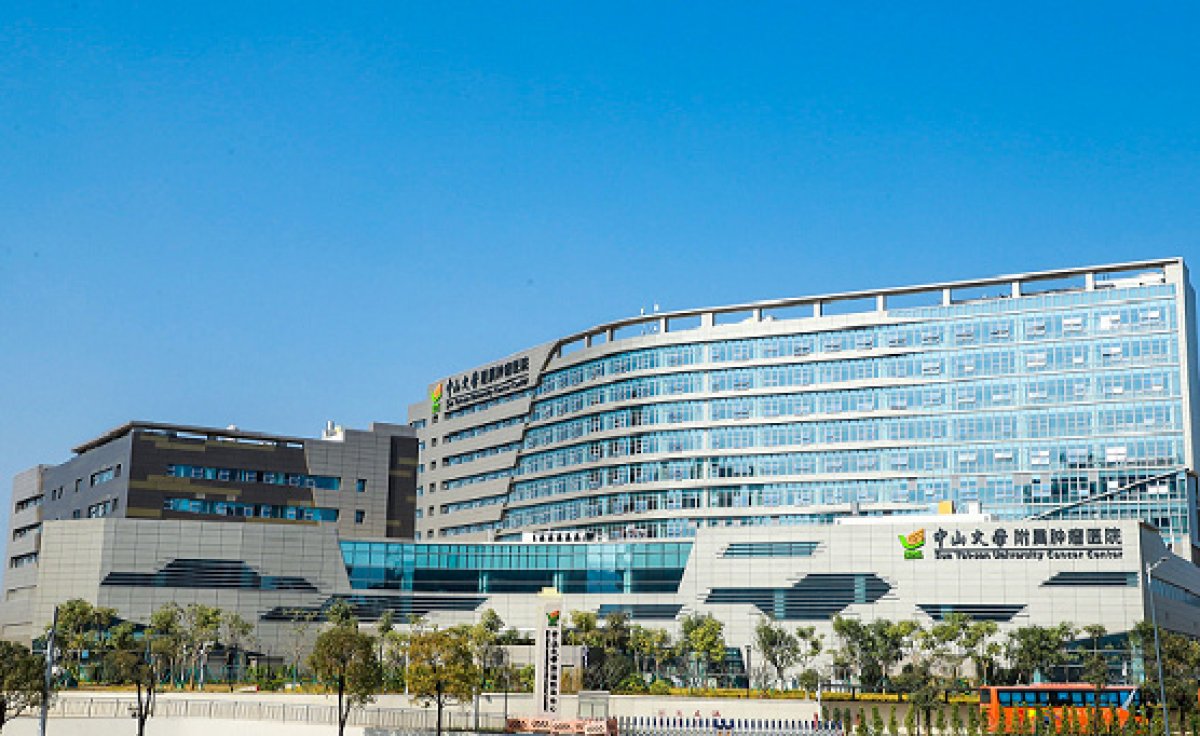
Fuda Cancer Hospital
China, Cantón


Revisado médicamente por
Fahad Mawlood
El costo del tratamiento del adenocarcinoma sigmoide en China oscila entre $9,500 y $17,500 para la resección quirúrgica primaria. La radioterapia especializada para el cáncer colorrectal generalmente varía de $11,500 a $27,500. Los gastos totales dependen del estadio del cáncer, la tecnología utilizada y las terapias adyuvantes requeridas. Los pacientes pueden esperar ahorros del 50-70% en comparación con los Estados Unidos. Los principales centros médicos incluyen Guangzhou, Pekín y Shanghái.
Costos típicos del tratamiento del adenocarcinoma sigmoide en China
Perspectiva de los expertos de Bookimed: Los pacientes con casos avanzados o complejos se benefician de centros que ofrecen terapias multimodales y mínimamente invasivas. El Hospital Oncológico Fuda en Guangzhou ofrece más de 10 opciones innovadoras, incluyendo criocirugía y NanoKnife. Este centro acreditado por la JCI ha tratado a más de 30,000 pacientes internacionales. Para radioterapia de precisión, el Hospital Xiamen Humanity cuenta con especialistas como el profesor Liu Shi Xin, quien destaca en VMAT y SBRT para cánceres abdominales.
| China | España | Turquía | |
|---|---|---|---|
| Radioterapia para el cáncer colorrectal | ≈ $11,500 | de $7,500 | de $5,000 |
| Quimioterapia para el cáncer de mama | ≈ $14,800 | de $1,700 | de $3,000 |
| Colectomía (resección del intestino grueso) | ≈ $9,500 | de $20,000 | de $5,000 |
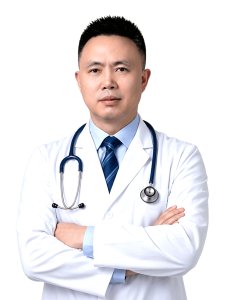
Médico jefe y profesor. Experto de nivel 1 en el Centro Oncológico del West China Hospital, Sichuan University (clasificado n.º 2 en China). Completó un posdoctorado en radiología intervencionista en el Chinese PLA General Hospital. Dirige equipos multidisciplinarios (MDT) para tumores complejos. Experto en oncología intervencionista mínimamente invasiva para cánceres de hígado, pulmón y páncreas.
Acreditaciones: Miembro del consejo, WATA. Miembro de los comités de CACA y CMDA sobre in

El Dr. He Weibing es pionero de la crioablación con argón‑helio en China, con más de 20 años de práctica en primera línea. Fue miembro fundador del Hospital Oncológico Fuda (Guangzhou). Cofundó su Centro de Tratamiento Tumoral Mínimamente Invasivo y fue subdirector ejecutivo. También ayudó a crear el Grupo de Ablación de la Asociación China contra el Cáncer. Ha sido operador principal en más de 10.000 procedimientos.
Se especializa en crioablación tumoral y domina la braquiterapia con

El profesor Luo Xiaoping es un radiólogo intervencionista reconocido a nivel nacional y una autoridad destacada en el oeste de China. Comenzó a realizar intervenciones vasculares pioneras a principios de la década de 1990. Ayudó a fundar el Grupo de Intervencionismo del Segundo Hospital Afiliado de la Universidad Médica de Chongqing.
Ha realizado más de 100 000 procedimientos intervencionistas, incluidos unos 4 000 casos complejos. Sus competencias clave incluyen TACE para el carcinoma

El profesor Xiao Yueyong es médico jefe del Departamento de Radiodiagnóstico del Hospital General del EPL de China. Es un experto líder en oncología intervencionista mínimamente invasiva. Es el primer presidente de WATA (2025–). Preside la Sociedad Internacional (2020–) y la Sociedad Asiática (2012–) de Crioterapia. También es subjefe del Grupo de Expertos de la NHC sobre regulaciones de ablación tumoral (2009–).
Ha realizado más de 100 000 procedimientos mínimamente invasivos guiados
 Olena Sikoza
Los hospitales chinos tratan el adenocarcinoma sigmoideo utilizando las directrices de la Sociedad China de Oncología Clínica (CSCO) y la Comisión Nacional de Salud (NHC). Estos estándares se alinean con los marcos internacionales NCCN y ESMO. Enfatizan la terapia basada en biomarcadores y los protocolos de equipos multidisciplinarios (MDT) para casos complejos o metastásicos.
Perspectiva del experto de Bookimed: Los datos muestran que los centros oncológicos chinos, como el Fuda Cancer Hospital (acreditado por la JCI), enfatizan terapias mínimamente invasivas especializadas para etapas avanzadas. Si bien las directrices nacionales recomiendan la quimioterapia estándar, estos centros de alto volumen a menudo integran protocolos dirigidos como NanoKnife o criocirugía para m
Los oncólogos determinan el estadio de un tumor antes del tratamiento mediante la estadificación clínica. Esta línea base identifica el tamaño del tumor primario y su propagación a través de imágenes y biopsias. En China, centros como el Fuda Cancer Hospital utilizan exploraciones PET/CT y CT para una visualización precisa. Luego, los médicos aplican el marco TNM para clasificar el cáncer del estadio 0 al IV.
Perspectiva del experto de Bookimed: El volumen de pacientes a menudo se correlaciona con la precisión diagnóstica en la oncología china. El Fuda Cancer Hospital ha atendido a más de 30.000 pacientes internacionales y se especializa en cáncer en estadio avanzado. Este alto volumen permite a especialistas como el Dr. Liu Shi Xin interpretar mejor las exploraciones por imágenes matizadas que los protocolos estándar po
Las opciones mínimamente invasivas estándar para el cáncer de colon sigmoide en China incluyen la sigmoidectomía radical laparoscópica y asistida por robot. Los centros de alto volumen realizan estos procedimientos siguiendo las directrices de la Sociedad China de Oncología Clínica (CSCO). Técnicas como la extracción de especímenes por orificios naturales (NOSE) también se utilizan ampliamente en departamentos de oncología chinos especializados.
Perspectiva del experto de Bookimed: Aunque muchos se centran en la tecnología robótica, el verdadero indicador de calidad en China es el volumen de casos del cirujano en centros acreditados por la JCI, como el Fuda Cancer Hospital. Este hospital ha tratado a más de 30.000 pacientes internacionales. El éxito clínico aquí a menudo depende de terapias mínimamente invasivas especializadas que sirven como alternativas a la quimiote
China sigue las directrices de la CSCO para el adenocarcinoma sigmoideo. Los regímenes de primera línea consisten en CapeOx o FOLFOX para los estadios II y III. Los casos metastásicos utilizan esas bases más FOLFIRI o FOLFOXIRI. El estado de los biomarcadores determina la adición de agentes dirigidos como Cetuximab o Bevacizumab.
Perspectiva del experto de Bookimed: El volumen de pacientes en centros especializados como el Fuda Cancer Hospital crea un alto nivel de estandarización de protocolos. Nuestros datos muestran que los pacientes oncológicos a menudo eligen estas instalaciones acreditadas por la JCI porque brindan acceso a equipos multidisciplinarios. Estos equipos combinan la quimioterapia sistémica con tecnologías avanzadas como NanoKnife o terapia intervencionista vascular para manejar casos complejos.
Consenso de los pacientes:
Los tratamientos dirigidos y basados en la inmunidad para el adenocarcinoma sigmoideo están ampliamente disponibles en China. La selección depende del perfil molecular del tejido tumoral o de la sangre. Los médicos utilizan PET/CT y biopsias para identificar marcadores genéticos específicos como el estado de KRAS, NRAS y MSI antes de prescribir estas terapias de precisión.
Perspectiva del experto de Bookimed: Aunque muchos equiparan la acreditación JCI con la atención quirúrgica estándar, en China a menudo señala el acceso a alternativas avanzadas a la quimioterapia. El Hospital Fuda Cancer de Guangzhou, que cuenta con el estatus JCI, atiende a más de 30.000 pacientes internacionales. Combina de forma única enfoques dirigidos con hipertermia por microondas y tecnologías NanoKnife para casos en estadios avanzados.
Consenso de los paciente
La Medicina Tradicional China (MTC) sirve como terapia de apoyo junto a la oncología estándar en China. Complementa procedimientos como la colectomía y la quimioterapia para el adenocarcinoma sigmoideo. Los centros acreditados por la JCI integran la acupuntura y la medicina herbal para aliviar las náuseas y la fatiga. Estos métodos mejoran la recuperación, pero nunca reemplazan los protocolos quirúrgicos o médicos estándar.
Perspectiva del experto de Bookimed: El análisis de los centros acreditados por la JCI en China, como el Fuda Cancer Hospital, revela un enfoque único para la atención en etapas avanzadas. Estos hospitales a menudo albergan servicios de MTC directamente dentro del departamento de oncología. Esta estructura permite a cirujanos como el Dr. Ma Xiao Ying monitorear los análisis hepáticos en tiempo real. Los pacientes se benefician cuando los tratamiento