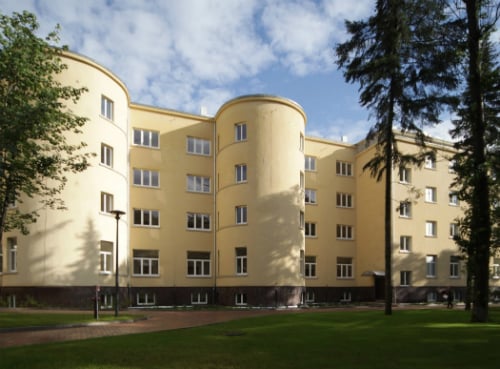
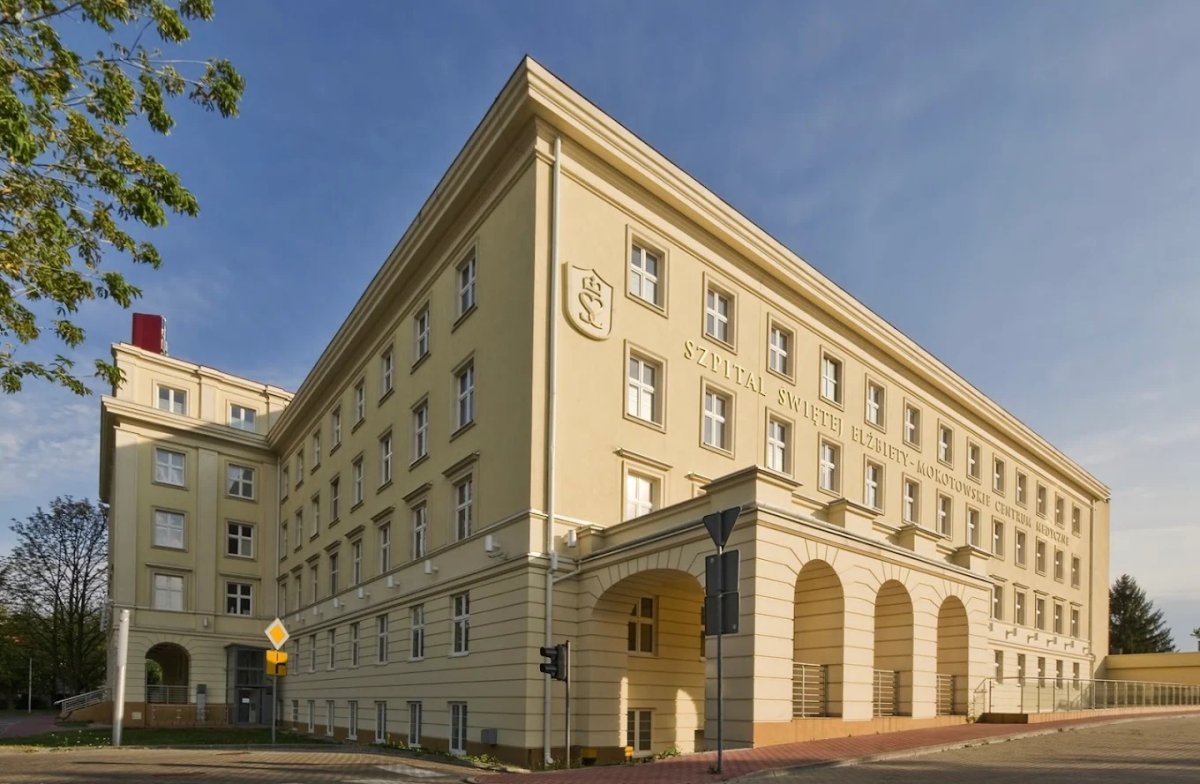
Hospital Universitario de Cracovia
Polonia, Cracovia


Revisado médicamente por
Fahad Mawlood
El costo del tratamiento del cáncer de riñón en Polonia está influenciado por el enfoque quirúrgico y la estadificación diagnóstica. De $1,300. Para una mayor precisión, una nefrectomía con el robot Da Vinci tiene un costo de Precio a consultar a Precio a consultar. Los pacientes suelen obtener ahorros del 50 al 80% en comparación con los EE. UU. Los principales centros de tratamiento incluyen Varsovia, Cracovia y Wieliszew.
Costos típicos del tratamiento del cáncer de riñón en Polonia
Perspectiva de los expertos de Bookimed: Los pacientes con antecedentes cardíacos complejos deben priorizar el Centro Europeo de Salud de Otwock. Cuenta con el único departamento interdisciplinario de cardio-oncología de Polonia para una seguridad especializada. Para la radiación no quirúrgica, el Instituto de Cirugía Cibernética Cyberknife ofrece tecnología única financiada mediante subvenciones. La atención multidisciplinaria a gran escala se obtiene mejor en el Hospital Universitario de Cracovia. Este centro atiende a más de 455,000 pacientes al año con 103 departamentos especializados.
| Polonia | España | Turquía | |
|---|---|---|---|
| Terapia con haz de protones | ≈ $85,000 | de $43,300 | de $25,000 |
| Sistema Robótico Da Vinci | ≈ $6,500 | ≈ $9,500 | de $23,900 |
| Radioterapia para el cáncer colorrectal | ≈ $4,500 | de $7,500 | de $5,000 |
| Nefrectomía laparoscópica | ≈ $9,000 | de $14,000 | de $8,000 |
| Nefrectomía | de $5,500 | de $17,700 | de $6,600 |
Bookimed no añade cargos extra a los precios de los tratamientos de Cancer de RIÑON. Las tarifas proceden de las listas de precios oficiales de las clínicas. Pagará directamente en la clínica por su tratamiento a su llegada al país.
Bookimed está comprometido con su seguridad. Solo trabajamos con las clínicas que mantienen altos estándares internacionales en el tratamiento de Cancer de RIÑON y cuentan con las licencias necesarias para atender a pacientes internacionales en todo el mundo.
Bookimed ofrece asistencia experta gratuita. Un coordinador médico personal le apoya antes, durante y después de su tratamiento, resolviendo cualquier problema. Nunca estará solo en su viaje médico de tratamiento de Cancer de RIÑON.


El Prof. Jakub Dobruch, MD, PhD, es urólogo y cirujano robótico. Es profesor de Urología y jefe del Departamento de Urología en CMKP (desde 2015). Se desempeña como vicepresidente de la Asociación Urológica Polaca (2022–2026). Obtuvo el título de profesor de Ciencias Médicas en 2021 y profesor de CMKP en 2019. Obtuvo la habilitación en 2014 y el título de especialista en urología en 2008.
Enfoque clínico: cirugía mínimamente invasiva y robótica para cánceres de próstata, vejiga y riñón

Escrito por Veronika Kazina

Escrito por Veronika Kazina

Escrito por Veronika Kazina

Escrito por Veronika Kazina

Escrito por Veronika Kazina
 Olena Sikoza
Cirujanos urológicos-oncológicos certificados realizan cirugías de cáncer de riñón en Polonia. Estos especialistas poseen calificaciones avanzadas. Muchos son miembros del European Board of Urology (FEBU). Esto garantiza que cumplen con rigurosos estándares internacionales. Siguen las guías clínicas de la Asociación Europea de Urología (EAU).
Perspectiva del experto de Bookimed: Polonia ha ascendido al séptimo lugar a nivel mundial en solicitudes médicas atendidas. Este volumen refleja una fuerte concentración de centros académicos especializados. El Hospital Universitario de Cracovia por sí solo atiende a 455,000 pacientes anualmente. Los grandes volúmenes de pacientes permiten a los cirujanos polacos obtener una amplia experiencia en casos oncológicos complejos. Esta alta carga de casos a menudo conduce a mejores resultados en cirugías
Los tratamientos estándar mínimamente invasivos para el cáncer de riñón en Polonia incluyen la nefrectomía parcial asistida por robot y la cirugía laparoscópica. Las instalaciones polacas utilizan el sistema robótico da Vinci para procedimientos de preservación de órganos. Las opciones no quirúrgicas como la crioablación y la ablación por radiofrecuencia están ampliamente disponibles para tumores pequeños de menos de 4 centímetros.
Perspectiva del experto de Bookimed: Aunque la cirugía robótica se reembolsa cada vez más, las listas de espera públicas pueden llegar a los 6 meses. Los grandes centros multidisciplinarios como el Hospital Universitario de Cracovia atienden a más de 450.000 pacientes al año. Elegir centros académicos de alto volumen a menudo garantiza el acceso a equipos especializados como NanoKnife o CyberKnife que
Los pacientes suelen permanecer en Polonia de 7 a 14 días. Este plazo cubre el diagnóstico preoperatorio, el procedimiento y el seguimiento inicial. La hospitalización por nefrectomía robótica o laparoscópica suele durar de 2 a 5 días. La mayoría de los pacientes reciben el alta para vuelos cortos en un plazo de 8 a 10 días.
Perspectiva del experto de Bookimed: Polonia ofrece una alta densidad de centros especializados como el Instituto de Cirugía Cibernética. Si bien muchos pacientes se centran en la cirugía, coordinar con centros que ofrecen tanto CyberKnife como robótica Da Vinci brinda más flexibilidad. La mayoría de los pacientes regresan a casa con éxito el octavo día si eligen enfoques robóticos mínimamente invasivos.
Consenso de los pacientes: Los pacientes señalan que el dolor suele ser más leve de lo esperado y manejable con medicamentos estándar. Muchos recomiendan planificar un margen de 14
La cirugía renal asistida por robot en Polonia resulta en una cicatrización mínima a través de 3 a 6 pequeñas incisiones. La mayoría de las marcas tienen solo de 0,5 a 2 cm de tamaño. Estos diminutos puertos se desvanecen significativamente durante 12 a 18 meses. A menudo se convierten en líneas claras o pequeños puntos casi invisibles.
Perspectiva del experto de Bookimed: Si bien Polonia alberga más de 85 clínicas para el cuidado renal, el Hospital Universitario de Cracovia destaca por su enorme volumen de 455,000 pacientes anuales. En centros académicos de alta capacidad, los cirujanos robóticos a menudo refinan la colocación de los puertos para seguir los pliegues naturales de la piel. Esta técnica, combinada con el uso del sistema Da Vinci, asegura que las cicatrices de extracción se posicionen
Los hospitales privados polacos y los principales centros de oncología ofrecen asistencia dedicada en inglés para pacientes internacionales con cáncer de riñón. La mayoría de los oncólogos principales hablan inglés con fluidez. Los departamentos especializados en instalaciones privadas se encargan de la coordinación médica, la logística de viajes y la documentación en inglés para garantizar una atención fluida a los extranjeros.
Perspectiva del experto de Bookimed: Los datos del Hospital Universitario de Cracovia muestran un volumen masivo de pacientes con más de 450.000 casos al año. Si bien los grandes centros académicos tienen más de 1.000 médicos, el dominio del inglés suele ser mayor entre el personal quirúrgico superior. Elegir un centro con una alta proporción de médicos por cama suele garantizar un mejor acceso a especialistas que hablan inglés.
Varsovia, Cracovia y Wieliszew son las principales ciudades polacas para el tratamiento del cáncer de riñón. Estos centros ofrecen tecnologías avanzadas como el sistema robótico Da Vinci y CyberKnife. Las instalaciones brindan atención multidisciplinaria, integrando oncología y urología. Los centros polacos mantienen altos estándares con herramientas de diagnóstico modernas como las tomografías PET/CT.
Opinión de expertos de Bookimed: Los datos sobre el volumen de pacientes sugieren una brecha de calidad significativa entre los centros regionales y los principales núcleos. El Hospital Universitario de Cracovia gestiona más de 450.000 pacientes al año con más de 1.000 médicos. Esta escala masiva a menudo se traduce en una mayor competencia quirúrgica en nefrectomías
Prepare copias digitales y físicas de los informes de patología, tomografías computarizadas (TC) o resonancias magnéticas (RM) (formato DICOM) y análisis de sangre recientes. Los cirujanos polacos requieren los resultados de la biopsia y pruebas de función renal como la TFG o la creatinina. Lleve una lista certificada de medicamentos y una carta médica de aptitud para viajar para la autorización quirúrgica.
Perspectiva del experto de Bookimed: Hospitales como el European Health Center Otwock a menudo coordinan la atención multidisciplinaria para casos complejos. Enviar sus registros digitales con 4 semanas de antelación ayuda a los cirujanos polacos a confirmar su plan quirúrgico. Este tiempo de espera garantiza que los recursos clínicos, como el robot Da Vinci, estén reservados para sus fechas específicas. También evita retrasos en la adaptación de la
La neurocirugía en Polonia ofrece atención de alta calidad en centros con certificación JCI e ISO. Los neurocirujanos polacos se adhieren a estrictos estándares de formación adoptados por la Unión Europea. Muchos han completado becas en Estados Unidos o Alemania. Tecnologías avanzadas, como CyberKnife, Gamma Knife y sistemas robóticos, están ampliamente disponibles en centros privados.
Opinión experta de Bookimed: Los datos muestran una fuerte correlación entre la especialización de una clínica y el origen de sus pacientes. La Clínica KCM atiende a más de 700 pacientes internacionales al año. Se especializa en cirugía de columna mínimamente invasiva. Este volumen de trabajo le permite ofrecer paquetes de servicios especializados, que a menudo incluyen bloques de diagnóstico e implantes específicos, como el DIAM de Medtronic.
Los neurocirujanos polacos son especialistas altamente cualificados que han completado al menos 13 años de rigurosa formación médica. Esto incluye seis años de estudios de medicina, 13 meses de prácticas y seis años de residencia. Deben aprobar el Examen Estatal de Especialización (PES) y suelen estar certificados por la Asociación Europea de Sociedades de Neurocirugía (EANS).
Opinión experta de Bookimed: Los datos muestran que los neurocirujanos polacos suelen especializarse en tecnologías altamente especializadas, como el sistema ApiFix o el sistema de endoscopia lumbar SED-YESS. Especialistas como el Dr. Stanisław Kwek, de la Clínica KCM, combinan la investigación postdoctoral con una práctica quirúrgica activa. Esta combinación de profundos conocimientos académicos y un alto volumen quirúrgico los hace especialmente eficaces en cirugías de columna complejas y mínimamente in
Entre las mejores clínicas neuroquirúrgicas de Polonia se encuentran el Hospital Carolina, la Clínica KCM y centros académicos de primer nivel como el Hospital Universitario de Cracovia. Estas instituciones ofrecen tratamientos de vanguardia para enfermedades de la columna vertebral y el cerebro que cumplen con los estándares de calidad ISO y emplean a especialistas miembros de organizaciones internacionales como AO Spine.
Opinión experta de Bookimed: Si bien muchos buscan los hospitales más grandes, los datos muestran que clínicas como el Hospital Carolina ofrecen mayor eficiencia para cirugías electivas. Con más de 40 médicos especialistas en este centro de 30 camas, la proporción médico-paciente es significativamente mayor que en los centros universitarios públicos. Esto se traduc